
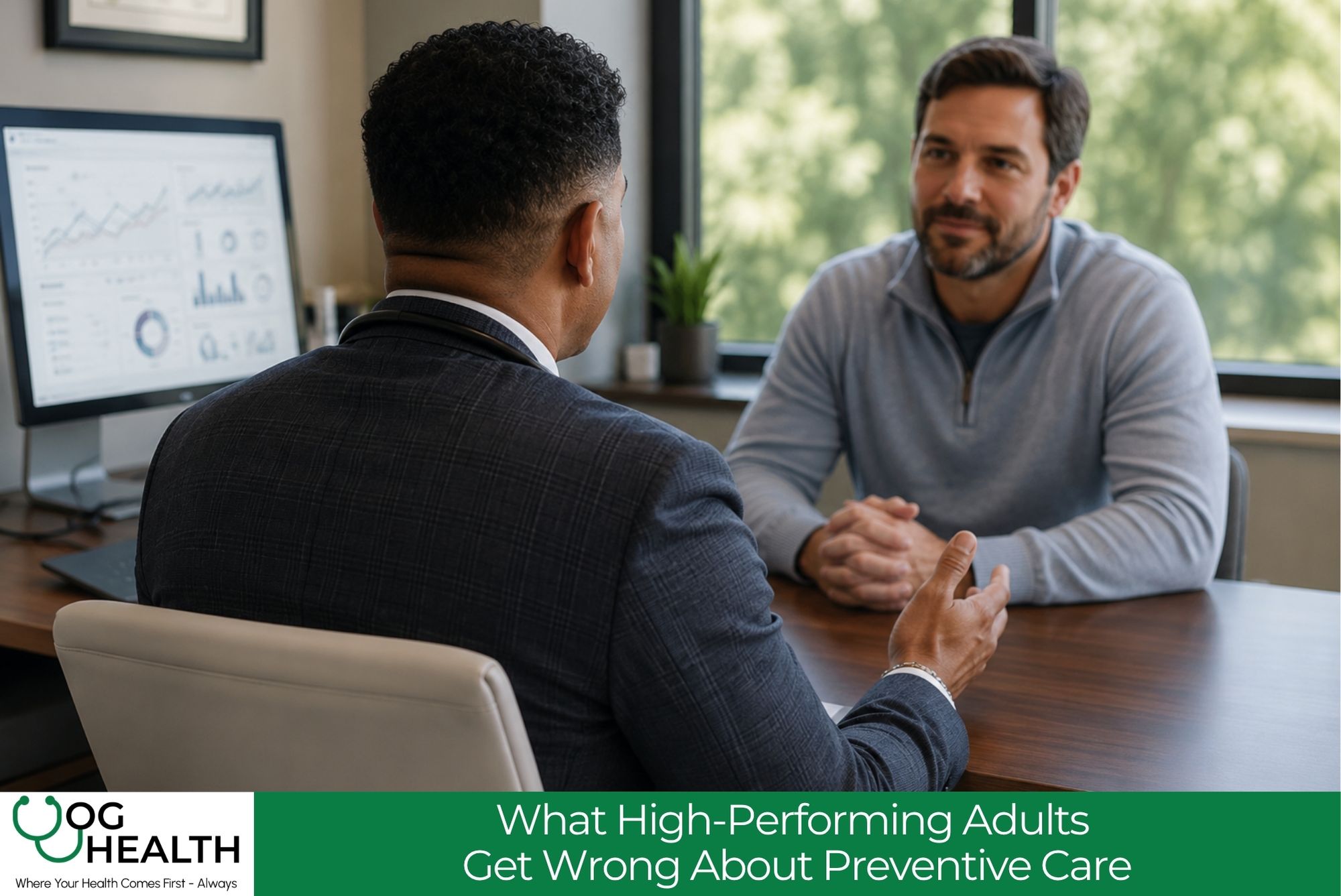
 In today’s culture of productivity and achievement, high-performing adults are often meticulous about career growth, financial planning, fitness routines, and family responsibilities. Yet many overlook one of the most important long-term investments they can make: truly personalized preventive healthcare.
The misconception is understandable. Many professionals assume that if they exercise regularly, eat relatively well, and attend an annual physical, they are “doing preventive care.” In reality, conventional healthcare often focuses on identifying disease after it has already begun developing—not optimizing long-term health before problems emerge.
At OG Health, preventive medicine is approached differently. Physician-led, relationship-based, and deeply personalized, OG Health helps patients move beyond reactive medicine toward a proactive strategy designed for longevity, resilience, and sustained performance.
For executives, entrepreneurs, busy parents, and health-conscious adults, understanding what modern preventive care actually requires can be life-changing.
The Hidden Problem with Traditional Preventive Care
Most adults believe preventive care consists of:
- Annual physicals
- Standard bloodwork
- Vaccinations
- Routine screenings
- Addressing symptoms when they appear
While these are important, they represent only the foundation of preventive medicine—not the full picture.
Traditional healthcare systems are often constrained by:
- Limited appointment times
- Fragmented communication
- Insurance-driven models
- Episodic care instead of longitudinal relationships
- Generic recommendations rather than individualized planning
As a result, many patients with high stress levels, metabolic dysfunction, poor sleep, hormone imbalances, chronic inflammation, or early cardiovascular risk factors go years without truly comprehensive evaluation.
By the time symptoms become severe enough to demand attention, the underlying issue may have been developing quietly for a decade or longer.
Why High Performers Are Especially Vulnerable
Ironically, the people who appear healthiest on the outside are often the most vulnerable to neglecting meaningful preventive care.
High-performing adults tend to:
- Push through fatigue
- Normalize chronic stress
- Ignore subtle symptoms
- Delay appointments
- Prioritize work and family over their own health
- Assume fitness equals overall wellness
But performance is not always synonymous with health.
A successful executive may have:
- Elevated inflammatory markers
- Early insulin resistance
- High cortisol levels
- Poor recovery capacity
- Sleep dysfunction
- Cardiovascular risk factors despite appearing fit
Likewise, busy parents and professionals may experience chronic exhaustion, hormone imbalances, anxiety, or burnout while continuing to function at a high level externally.
Preventive care should not begin when health deteriorates. It should identify vulnerabilities early—before performance, energy, cognition, or quality of life decline.
The Difference Between Reactive and Proactive Medicine
Reactive Healthcare
Reactive care focuses on:
- Treating illness after symptoms appear
- Managing disease progression
- Short-term problem-solving
- Isolated visits
Proactive Preventive Care
Proactive care focuses on:
- Identifying risk factors early
- Optimizing health metrics
- Monitoring trends over time
- Building long-term physician relationships
- Creating individualized wellness strategies
- Improving longevity and quality of life
At OG Health, patients benefit from a longitudinal approach to medicine—one that evolves with their life stage, health goals, family history, and changing physiology.
Personalized Preventive Care Is Not “Luxury Medicine”
One of the most common misconceptions is that advanced preventive healthcare is only for elite athletes or ultra-wealthy individuals.
In reality, personalized medicine is increasingly becoming essential for anyone who values:
- Longevity
- Cognitive performance
- Sustainable energy
- Disease prevention
- Healthy aging
- Family wellness
- Time efficiency
- Continuity of care
High-achieving adults often invest heavily in:
- Financial advisors
- Executive coaching
- Fitness training
- Nutrition programs
- Career development
Yet they rarely apply the same level of intentionality to healthcare.
Comprehensive preventive care is not about excess testing or wellness trends. It is about building a strategic healthcare partnership centered on long-term outcomes.
What Comprehensive Preventive Care Should Include
Modern preventive medicine should evaluate the entire patient—not just isolated symptoms.
Comprehensive Health Assessments
Advanced preventive care often includes:
- Detailed medical history evaluation
- Family risk assessment
- Lifestyle and stress analysis
- Sleep evaluation
- Cardiovascular risk screening
- Metabolic health assessment
- Hormonal evaluation
- Nutritional assessment
- Cognitive and mental wellness review
Ongoing Monitoring
True preventive care is longitudinal. Health trends matter more than isolated snapshots.
Patients benefit from:
- Consistent physician oversight
- Data tracking over time
- Personalized follow-up plans
- Adjustments based on evolving health markers
Relationship-Based Care
Preventive medicine works best when physicians deeply understand the patient’s:
- Goals
- Work demands
- Stressors
- Family history
- Lifestyle patterns
- Long-term health priorities
This level of continuity allows for earlier intervention and more meaningful care.
Preventive Care and Longevity
Many adults think about healthcare in terms of avoiding illness. Modern preventive medicine expands that goal.
The objective becomes:
- Extending healthspan, not just lifespan
- Preserving cognitive performance
- Maintaining mobility and strength
- Supporting emotional resilience
- Preventing avoidable chronic disease
- Improving daily quality of life
This is particularly important because chronic diseases—including heart disease, diabetes, and metabolic dysfunction—often develop silently for years before diagnosis.
With proactive monitoring and personalized intervention, many of these risks can be addressed significantly earlier.
The Cost of Waiting Too Long
Delaying preventive care often creates consequences that affect every aspect of life.
When underlying issues go unaddressed, patients may experience:
- Chronic fatigue
- Burnout
- Decreased productivity
- Mood changes
- Sleep disruption
- Weight gain
- Cardiovascular complications
- Reduced cognitive clarity
- Increased long-term healthcare costs
For busy professionals and families, declining health rarely happens suddenly. It happens gradually—until optimal function no longer feels normal.
The earlier preventive strategies begin, the more opportunity exists to preserve long-term vitality.
Frequently Asked Questions About Preventive Care
What is preventive care?
Preventive care focuses on identifying and reducing health risks before serious illness develops. It includes screenings, evaluations, lifestyle interventions, and long-term physician oversight designed to support overall health and longevity.
How is personalized preventive care different from a regular annual physical?
Traditional annual physicals often focus on basic screenings and short appointments. Personalized preventive care takes a more comprehensive approach by evaluating long-term trends, lifestyle factors, metabolic health, cardiovascular risk, stress, sleep, and individualized wellness goals.
Who benefits most from preventive healthcare?
Preventive healthcare is valuable for adults of all ages, but especially beneficial for:
-
Executives and professionals under chronic stress
-
Busy parents
-
Adults with family histories of chronic disease
-
Patients seeking longevity-focused care
-
Individuals experiencing fatigue, burnout, or unexplained symptoms
-
Adults interested in optimizing long-term wellness
Can you be physically fit but still unhealthy?
Yes. Many individuals who appear healthy externally may still have underlying issues such as elevated inflammation, insulin resistance, hormone imbalances, sleep dysfunction, or cardiovascular risk factors. Fitness alone does not guarantee comprehensive health.
Why is longitudinal care important?
Longitudinal care allows physicians to track health changes over time instead of relying on isolated appointments. This improves early detection, continuity, personalization, and overall health outcomes.
What conditions can preventive care help identify early?
Preventive care may help identify early signs of:
-
Cardiovascular disease
-
Diabetes and insulin resistance
-
Hypertension
-
Hormonal imbalances
-
Sleep disorders
-
Nutritional deficiencies
-
Chronic inflammation
-
Stress-related health issues
-
Metabolic dysfunction
Is preventive medicine only for older adults?
No. Preventive medicine is valuable at every stage of adulthood. In many cases, beginning preventive care earlier allows patients to reduce long-term risks and maintain better health over time.
How often should adults undergo preventive evaluations?
The ideal frequency depends on age, risk factors, medical history, and health goals. Many adults benefit from ongoing physician-guided monitoring rather than waiting for symptoms to appear.
Why choose a physician-led preventive care model?
Physician-led care provides deeper clinical insight, evidence-based recommendations, continuity, and personalized medical oversight. Patients benefit from having a trusted healthcare partner who understands their evolving health profile over time.
Elevating Preventive Care for Modern Life
High-performing adults often spend years optimizing every aspect of their professional and personal lives while overlooking the most important foundation beneath it all: their health.
True preventive medicine is not generic wellness advice. It is a strategic, physician-led partnership focused on helping patients sustain energy, performance, resilience, and long-term vitality.
At OG Health, patients receive personalized, longitudinal care designed around proactive health optimization—not reactive disease management.
For professionals, families, and individuals seeking a higher standard of preventive healthcare, investing in comprehensive care today can profoundly shape health outcomes for years to come.
Contact Information
OG Health
385 Inverness Pkwy, Ste 130
Greenwood Village, CO 80112
Phone: (303) 625-7976
Website: oghealth.org