
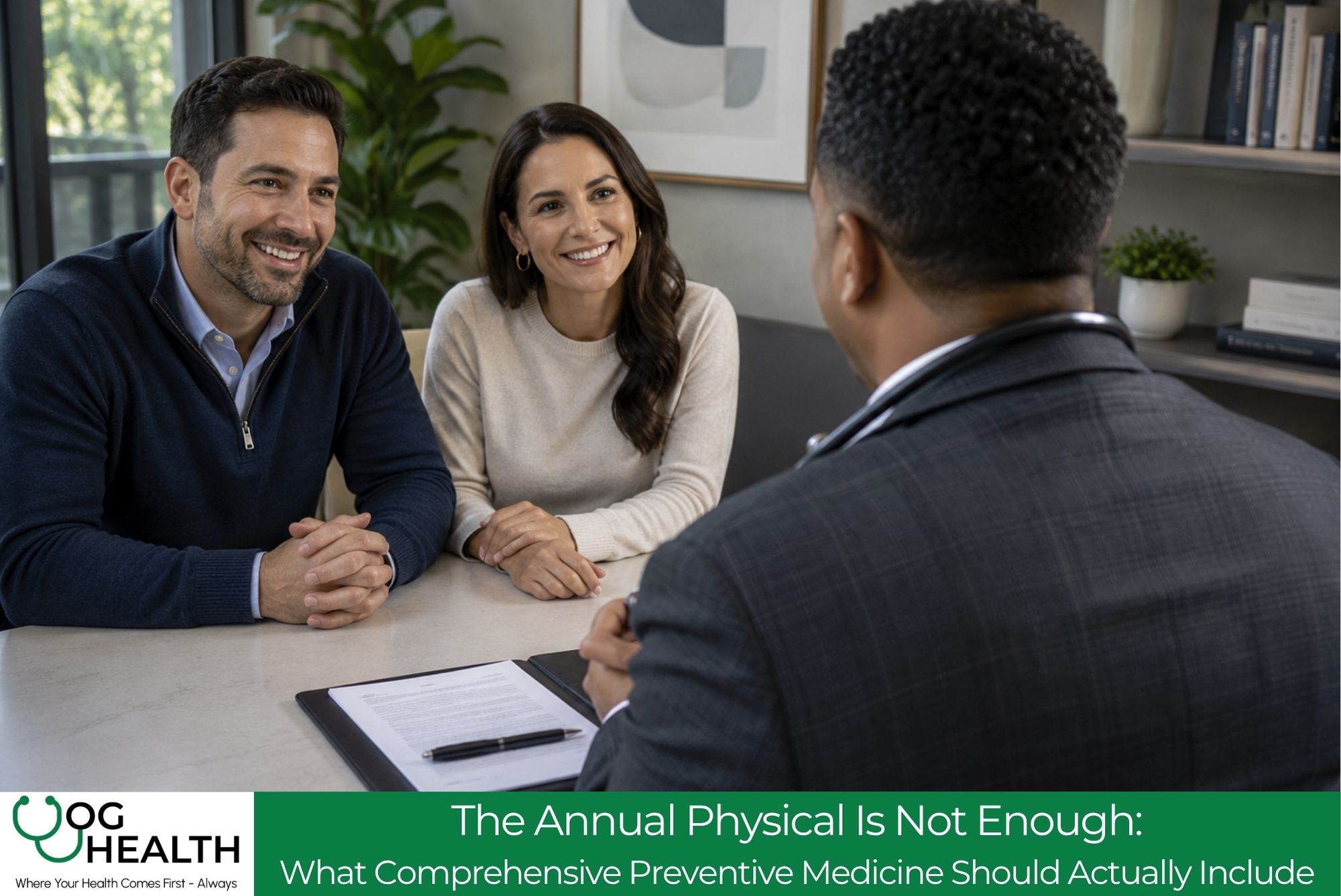
 For decades, the annual physical has been considered the cornerstone of preventive healthcare. Many patients schedule a yearly appointment, complete routine blood work, discuss a few symptoms, and leave believing they have “checked the box” on their health for another year.
But modern medicine—and modern life—have changed.
Today’s professionals, executives, parents, and high-performing individuals face chronic stress, poor sleep, metabolic dysfunction, cardiovascular risk, hormone imbalances, and lifestyle-related conditions that often develop silently over years before symptoms appear. A brief once-a-year exam is rarely enough to identify these risks early or provide the personalized guidance needed to prevent disease before it progresses.
At OG Health, comprehensive preventive medicine goes far beyond the standard annual physical. It is a physician-led, longitudinal approach designed to optimize health proactively, identify hidden risk factors earlier, and create highly individualized strategies for long-term wellness and performance.
Why Traditional Annual Physicals Often Fall Short
The traditional annual physical serves an important purpose, but it is frequently limited by time constraints, generalized screening protocols, and reactive healthcare models.
A typical physical may include:
- Basic vital signs
- Standard blood tests
- Medication review
- Brief discussion of symptoms
- General lifestyle recommendations
While these components are valuable, they often fail to provide a complete picture of a patient’s long-term health trajectory.
Many serious conditions—including cardiovascular disease, insulin resistance, hormone dysfunction, inflammation, sleep disorders, and certain cancers—develop gradually and silently. Standard testing may not detect early warning signs until disease processes are already underway.
Additionally, highly individualized factors such as genetics, stress physiology, nutrition, environmental exposures, body composition, and performance metrics are rarely explored in depth during conventional visits.
Preventive medicine should not simply aim to identify disease. It should aim to preserve vitality, optimize function, and extend quality of life.
What Comprehensive Preventive Medicine Should Actually Include
A truly comprehensive preventive medicine program should evaluate the whole person—not just isolated symptoms or lab values.
1. Advanced Cardiovascular Risk Assessment
Heart disease remains one of the leading causes of death, yet many patients considered “healthy” still carry hidden cardiovascular risk factors.
Comprehensive prevention often includes:
- Advanced lipid testing
- Inflammatory markers
- Coronary artery calcium scoring
- Blood pressure trend analysis
- Metabolic health evaluation
- Family history assessment
- Lifestyle and stress evaluation
Rather than waiting for overt symptoms, physician-led preventive care focuses on identifying risk decades before a cardiac event occurs.
2. Metabolic Health Evaluation
Many patients have early metabolic dysfunction long before they develop diabetes.
A deeper metabolic assessment may evaluate:
- Insulin resistance
- Glucose regulation
- Body composition
- Weight distribution
- Energy levels
- Exercise recovery
- Nutritional patterns
Metabolic dysfunction is closely linked to cardiovascular disease, cognitive decline, fatigue, hormonal imbalance, and inflammation. Early intervention can dramatically improve long-term outcomes.
3. Personalized Hormone and Age-Related Health Screening
Hormonal changes can significantly impact quality of life, energy, cognition, sleep, and body composition in both men and women.
Comprehensive preventive medicine may include evaluations related to:
- Testosterone levels
- Menopause and perimenopause
- Thyroid function
- Adrenal health
- Sexual wellness
- Energy optimization
- Bone health
These assessments are especially important for busy professionals and adults navigating demanding careers, family responsibilities, and aging-related physiological changes.
4. Cognitive and Mental Wellness Assessment
Mental and cognitive health are critical components of preventive medicine but are often under-addressed in routine care.
A comprehensive approach should consider:
- Stress burden
- Burnout risk
- Sleep quality
- Cognitive performance
- Mood changes
- Anxiety and depression screening
- Lifestyle contributors to mental fatigue
For executives and high-performing individuals, cognitive resilience is directly connected to professional performance, relationships, and long-term health outcomes.
5. Nutrition and Lifestyle Medicine
Generic wellness advice is rarely effective because every patient’s lifestyle, schedule, biology, and goals are different.
Personalized preventive care should provide tailored recommendations related to:
- Nutrition strategy
- Exercise programming
- Recovery and sleep optimization
- Weight management
- Stress reduction
- Alcohol and tobacco use
- Sustainable behavior change
The goal is not temporary improvement—it is long-term, sustainable health optimization.
6. Longitudinal Physician-Led Care
One of the most overlooked aspects of preventive medicine is continuity.
True preventive care is not a single appointment. It is an ongoing relationship that evolves over time.
Longitudinal physician-led care allows for:
- Trend monitoring
- Earlier intervention
- Personalized care adjustments
- Better coordination between specialists
- Improved accountability
- Stronger patient-doctor relationships
This continuity is particularly valuable for patients with demanding schedules who want proactive, organized healthcare guidance rather than fragmented reactive care.
Prevention Is About More Than Avoiding Disease
Modern preventive medicine is increasingly focused not only on lifespan, but also healthspan—the number of years patients remain healthy, functional, energetic, and independent.
Patients today are asking more sophisticated questions:
- How do I reduce my long-term cardiovascular risk?
- How can I maintain cognitive performance as I age?
- What can I do now to prevent chronic disease later?
- Why do I feel fatigued despite “normal” lab work?
- How can healthcare become more personalized and proactive?
These are the questions comprehensive preventive medicine is designed to answer.
Who Benefits Most from Comprehensive Preventive Medicine?
Comprehensive preventive care is especially valuable for:
- Executives and business professionals
- Busy parents and families
- Adults over 35
- Patients with family histories of chronic disease
- Individuals experiencing fatigue or burnout
- Patients seeking longevity-focused care
- Health-conscious individuals wanting proactive guidance
- Those frustrated by rushed traditional healthcare experiences
Patients who value personalization, continuity, and physician access often find comprehensive preventive care provides a significantly higher level of support and insight.
Frequently Asked Questions About Comprehensive Preventive Medicine
Is an annual physical still important?
Yes. Annual physicals remain an important foundation of preventive healthcare. However, many patients benefit from more advanced evaluations and ongoing physician-guided care beyond a standard yearly appointment.
What is the difference between preventive medicine and traditional primary care?
Traditional primary care often focuses on diagnosing and treating active symptoms or illnesses. Preventive medicine focuses on identifying risks earlier, optimizing health proactively, and reducing the likelihood of future disease development.
What conditions can preventive medicine help identify early?
Comprehensive preventive care may help identify early signs of:
-
Cardiovascular disease
-
Diabetes and insulin resistance
-
Hormone imbalances
-
Thyroid disorders
-
Obesity-related conditions
-
Sleep disorders
-
Cognitive decline risk
-
Nutritional deficiencies
-
Chronic inflammation
How often should preventive screenings be done?
Screening frequency depends on age, family history, lifestyle factors, existing conditions, and overall risk profile. Personalized physician-guided care helps determine the most appropriate schedule for each individual.
Is preventive medicine only for older adults?
No. Preventive medicine benefits adults of all ages, particularly individuals with demanding lifestyles, family histories of disease, or long-term health optimization goals.
Why is personalized care important in preventive medicine?
Every patient has unique genetics, lifestyles, stressors, and health risks. Personalized care allows physicians to create strategies tailored to the individual rather than relying solely on generalized recommendations.
Can preventive medicine improve energy and performance?
In many cases, yes. Comprehensive evaluations may uncover contributing factors related to sleep, hormones, nutrition, stress, metabolic health, or recovery that affect overall energy and performance.
Does comprehensive preventive medicine replace specialists?
Not necessarily. Preventive medicine often works collaboratively with specialists while providing centralized, longitudinal oversight of a patient’s overall health strategy.
What should patients look for in a preventive medicine practice?
Patients should seek physician-led care that emphasizes:
-
Personalized evaluations
-
Longitudinal relationships
-
Evidence-based medicine
-
Advanced diagnostics when appropriate
-
Comprehensive risk assessment
-
Lifestyle and wellness integration
-
Accessible communication and continuity
The Future of Healthcare Is Proactive
Healthcare is evolving beyond reactive symptom management toward a more personalized, preventive, and data-informed model.
The question is no longer whether prevention matters. The question is whether your current healthcare approach is comprehensive enough to truly protect your long-term health.
At OG Health, preventive medicine is designed to provide a higher level of physician-led care—focused on early detection, personalized strategy, and long-term wellness optimization for patients who want more than a standard annual physical.
Contact Information
OG Health
385 Inverness Pkwy, Ste 130
Greenwood Village, CO 80112
Phone: (303) 625-7976
Website: oghealth.org