
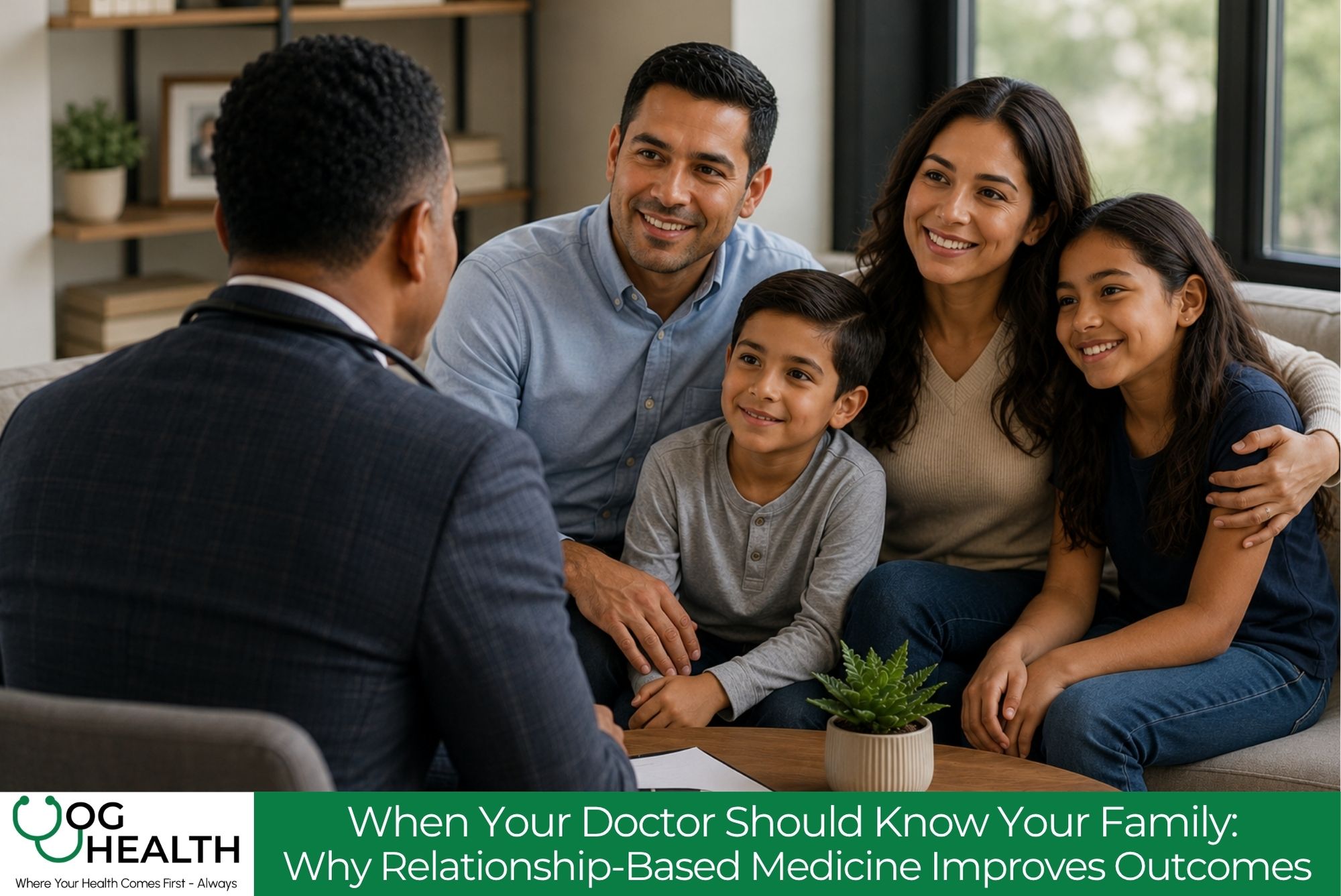
 In today’s healthcare landscape, many patients feel rushed, unseen, and reduced to symptoms on a chart. Appointments are often brief, fragmented, and transactional—leaving little room for the kind of meaningful physician-patient relationships that truly improve long-term health outcomes.
But medicine was never meant to function this way.
At OG Health, relationship-based medicine is central to how care is delivered. By deeply understanding not only a patient’s medical history, but also their family dynamics, lifestyle, stressors, goals, and personal health risks, physicians can provide a far more accurate, proactive, and personalized level of care.
For professionals balancing demanding careers, busy families managing multiple responsibilities, and patients seeking a higher standard of preventive medicine, relationship-centered healthcare offers something increasingly rare: continuity, trust, and truly individualized care.
What Is Relationship-Based Medicine?
Relationship-based medicine is a physician-led healthcare model built around long-term continuity and personalized understanding. Rather than treating isolated symptoms during occasional appointments, this approach focuses on knowing the patient comprehensively over time.
That includes understanding:
- Family medical history
- Lifestyle and daily routines
- Occupational stress and demands
- Sleep patterns and nutrition
- Emotional and mental wellbeing
- Genetic and preventive risk factors
- Longitudinal health trends
When physicians know the broader context of a patient’s life, they can identify patterns earlier, prevent disease more effectively, and guide patients toward better long-term outcomes.
At OG Health, care is designed to be proactive rather than reactive—focusing on prevention, optimization, and lifelong wellness instead of simply responding to illness after it develops.
Why Family Context Matters in Healthcare
A patient’s family history can reveal critical information about future health risks long before symptoms appear.
Conditions such as:
- Heart disease
- Diabetes
- Hypertension
- Cancer
- Autoimmune disorders
- Mental health conditions
- Alzheimer’s disease
- Stroke
often have hereditary or familial patterns. But beyond genetics, family environments and behaviors also influence health outcomes significantly.
For example, a physician who understands a patient’s family stressors, caregiving responsibilities, work-life balance, or generational health habits can provide more nuanced and effective medical guidance.
This deeper understanding allows physicians to:
- Recommend earlier screenings
- Monitor elevated risks more closely
- Tailor preventive strategies
- Identify subtle health changes sooner
- Create realistic and sustainable care plans
The result is more precise, personalized medicine.
The Difference Between Transactional Care and Longitudinal Care
Traditional healthcare models frequently prioritize volume over continuity. Patients may see multiple providers across urgent care centers, specialists, or large systems where no single physician fully understands their health journey.
This fragmented model often leads to:
- Repeated testing
- Missed warning signs
- Inconsistent treatment recommendations
- Medication overlap
- Reduced patient trust
- Delayed diagnoses
Longitudinal care changes this dynamic entirely.
When patients work consistently with the same physician over time, their provider develops a comprehensive understanding of their baseline health. Even subtle changes in energy, lab markers, mood, sleep, or weight may become more noticeable—and actionable.
At OG Health, longitudinal care supports better decision-making because physicians are not evaluating patients in isolation. They are evaluating them within the context of years of medical insight and relationship continuity.
Preventive Medicine Works Best When Care Is Personalized
Preventive medicine is often discussed broadly, but effective prevention is highly individualized.
Two patients may have the same age and similar lab values yet require entirely different preventive strategies based on:
- Family history
- Stress levels
- Occupation
- Hormonal health
- Cardiovascular risk
- Sleep quality
- Metabolic markers
- Lifestyle patterns
Relationship-based medicine allows physicians to move beyond generic recommendations and develop care plans that are actually achievable and clinically relevant.
For busy executives, entrepreneurs, and professionals, this may mean identifying early indicators of burnout, chronic stress, hypertension, or metabolic dysfunction before they become serious health problems.
For families, it may mean coordinating preventive care across generations and helping patients navigate healthcare decisions with clarity and confidence.
Trust Improves Health Outcomes
Research consistently shows that strong physician-patient relationships improve patient outcomes.
When patients trust their physician, they are more likely to:
- Follow treatment plans
- Communicate openly
- Address concerns earlier
- Stay consistent with preventive care
- Participate actively in long-term wellness
Trust also improves diagnostic accuracy. Patients who feel heard are more likely to share symptoms, lifestyle details, or concerns that may otherwise go unmentioned during rushed appointments.
At OG Health, physicians prioritize time, communication, and continuity because exceptional care begins with trust and understanding—not rushed interactions.
Personalized Healthcare for Modern Life
Modern life places extraordinary demands on individuals and families. High-performing professionals often struggle to prioritize their own health while balancing careers, parenting, travel, and constant connectivity.
Relationship-based medicine helps simplify and elevate healthcare by creating a more strategic, personalized experience.
This model is particularly valuable for patients seeking:
- Concierge-style attention
- Preventive and longevity-focused care
- Comprehensive health optimization
- Physician accessibility and continuity
- Personalized wellness planning
- Coordinated long-term care
At OG Health, care is intentionally designed around the patient—not around healthcare system limitations.
Why Patients Are Returning to Physician-Led Personalized Care
Patients increasingly want healthcare that feels:
- Thoughtful
- Proactive
- Personalized
- Data-informed
- Relationship-driven
They want physicians who recognize patterns, remember details, and understand the full picture of their lives and health goals.
Relationship-based medicine restores an important principle that modern healthcare has often lost: physicians should know their patients well enough to care for them comprehensively.
Because when your doctor truly knows you—and your family—they can deliver better, smarter, and more preventive care.
Frequently Asked Questions (Q&A)
What is relationship-based medicine?
Relationship-based medicine is a personalized healthcare approach centered on long-term physician-patient relationships. It emphasizes continuity, trust, prevention, and individualized care rather than isolated symptom treatment.
How does family history impact healthcare decisions?
Family history helps physicians identify inherited health risks and determine whether earlier screenings, lifestyle interventions, or more proactive monitoring may be necessary.
What are the benefits of longitudinal care?
Longitudinal care improves continuity and allows physicians to track changes over time, resulting in earlier intervention, more personalized treatment plans, and better overall health outcomes.
Is relationship-based medicine the same as concierge medicine?
Not always, though they often overlap. Relationship-based medicine focuses on personalized continuity of care and deeper physician engagement. Some practices may also offer concierge or membership-based models to support this level of care.
Why is preventive care important?
Preventive care helps identify health concerns before they become serious or chronic. Early detection and personalized intervention can reduce long-term complications and improve quality of life.
Who benefits most from personalized preventive care?
Busy professionals, executives, families, patients managing chronic conditions, and individuals focused on longevity and wellness often benefit significantly from personalized preventive medicine.
How does OG Health personalize patient care?
OG Health emphasizes physician-led, relationship-centered care that considers each patient’s medical history, family history, lifestyle, goals, and long-term wellness strategy.
Can relationship-based medicine improve chronic disease management?
Yes. Ongoing physician relationships often lead to better monitoring, earlier interventions, improved adherence to care plans, and more effective chronic disease management.
Why do patients feel dissatisfied with traditional healthcare systems?
Many patients experience rushed appointments, fragmented care, and limited continuity between providers. Relationship-based care addresses these issues by prioritizing time, communication, and long-term understanding.
What makes OG Health different?
OG Health focuses on elevated, highly personalized preventive and longitudinal care designed for patients who value physician accessibility, continuity, and comprehensive health optimization.
Contact Information
OG Health
385 Inverness Pkwy, Ste 130
Greenwood Village, CO 80112
Phone: (303) 625-7976
Website: oghealth.org