
Diabetes Management: Keeping Blood Sugar Steady Over Time

You got a lab result back and the word "diabetes" was on it. Now what? That's the visit we have most often with new patients, and the honest answer is that nothing about it happens in one appointment.
Diabetes Management is about blood sugar and how your body responds to insulin. We track it through specific labs, mainly your A1C, which, according to the American Diabetes Association, shows an average over the last few months instead of a single morning snapshot.[1] That number tells us whether the current plan is working or needs a change.
Here's what ongoing Diabetes Management usually involves:
- Regular A1C and related bloodwork on a set schedule
- Medication review and dose adjustments as your numbers shift
- Food and activity conversations that fit your actual week
- Watching for related problems before they become serious
- Coordinating with specialists when your care needs more hands
Diabetes Management sits next to blood pressure and cholesterol care on this page, and a lot of patients get all three flagged at once. They're still separate. Diabetes Management has its own labs, its own targets, and its own medications, so it gets its own plan.
High Blood Pressure Management: Watching the Daily Readings
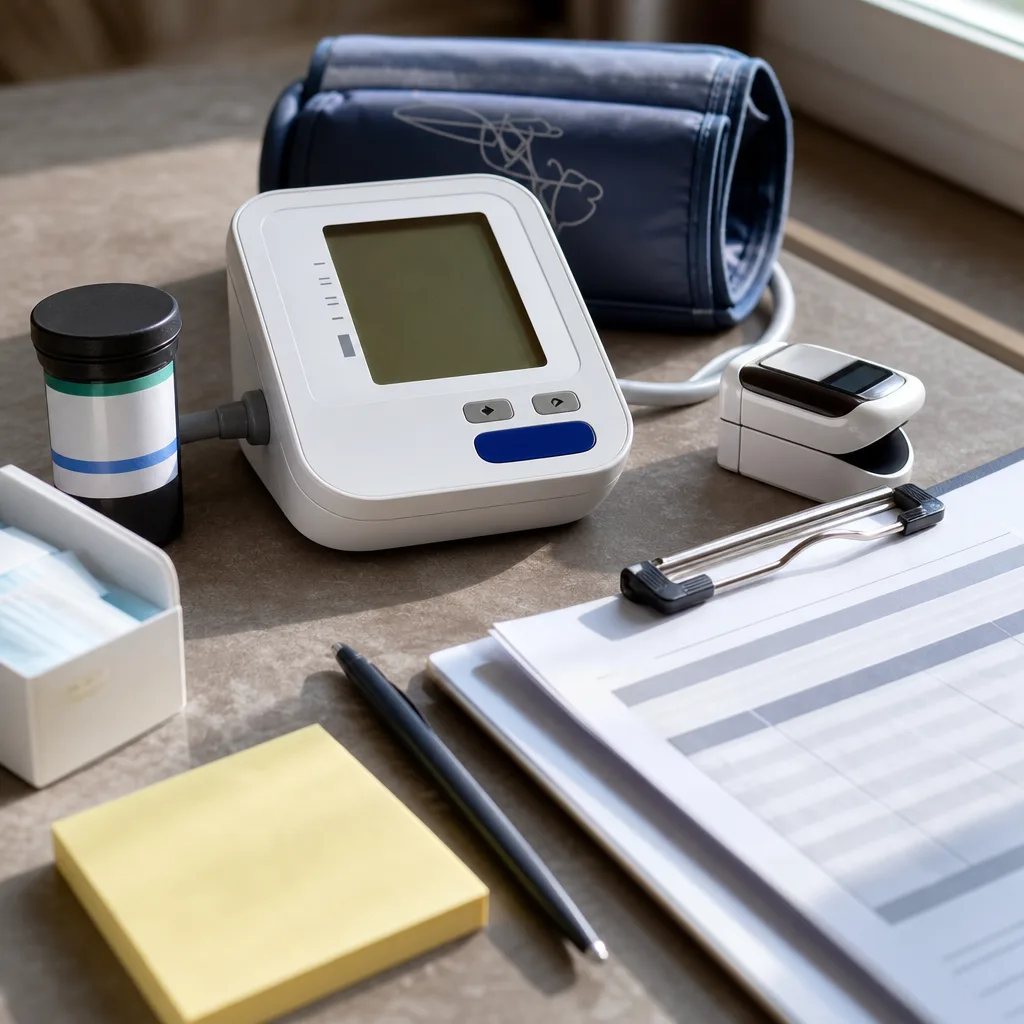
High Blood Pressure Management is the care you get when your readings keep coming in above where they should be. Sometimes we catch it during a routine exam. Sometimes you catch it yourself with a cuff at home and bring it in.
What makes this one different from cholesterol care is where the information comes from. High Blood Pressure Management depends on readings taken over and over, at home and in the office, across different days and different moods. Cholesterol care depends on a lab panel drawn once and read carefully. Same category of risk, completely different way of measuring it.
One high reading isn't a diagnosis. Blood pressure moves around. It climbs when you're stressed, when you've had coffee, when you've just fought traffic on I-25 to get to your appointment. That's why we look at patterns instead of single numbers.
From there, High Blood Pressure Management means checking in regularly, reviewing every medication you're on, and working on the daily habits that move the number. Salt, sleep, alcohol, movement. Not glamorous, but they matter. And when medication is the right call, we start low, watch closely, and adjust.
High Cholesterol Management: Reading Your Lipid Panel Properly
A lipid panel is a blood test that breaks your cholesterol into parts. High Cholesterol Management is what happens after we read it.
This service is for you if your panel comes back abnormal, or if heart disease runs in your family and you want to know where you stand. Unlike blood pressure, cholesterol gives you no symptoms and no daily number to check. You find out from a lab draw, which is exactly why plenty of people go years without knowing.
The panel by itself isn't the whole answer either. Two people can have identical numbers and need completely different plans, because risk depends on age, family history, blood pressure, whether you smoke, and whether you're also managing diabetes. So High Cholesterol Management starts with the panel and then widens out to the rest of your picture.
That conversation usually covers food changes with real specifics instead of vague advice, whether a statin or another medication makes sense for your risk level, and how often to recheck the panel. Some patients move their numbers with diet alone. Some need medication. Most land somewhere in between, and that's fine.
Anxiety Treatment You Can Start With Your Own Doctor
Do you need a psychiatrist before anyone will help you? No. That's probably the most common thing people get wrong about this, and it keeps them waiting months for care they could have started right away.
Anxiety Treatment in primary care means we evaluate what's happening, name it, and build a plan. Anxiety shows up in the body as much as the mind: tight chest, bad sleep, a stomach that won't settle, a heart rate that spikes for no clear reason. Part of the first visit is ruling out the physical causes that can mimic all of that, including thyroid problems.
Signs it's worth bringing up:
- Worry that runs in the background most days
- Trouble falling asleep because your thoughts won't stop
- Avoiding things you used to handle without a second thought
- Physical tension, jaw clenching, or headaches with no other cause
Anxiety Treatment addresses a diagnosed anxiety condition directly, with a specific treatment plan and follow-up. Mental Health Counseling, further down this page, is broader ongoing support that doesn't require a diagnosis at all. If your symptoms need more than primary care can give, we coordinate the referral rather than handing you a phone number and wishing you luck.
Depression Treatment: Screening, Medication, and Real Follow-Up
Two weeks is the usual marker. When low mood, flat energy, or loss of interest in things you normally enjoy sticks around that long, it's worth an appointment.
Depression Treatment here starts with screening; a structured conversation and a few standard questions that give us a baseline to measure against later. Bloodwork often comes into it too, since anemia and thyroid disease can look a lot like depression from the outside.
If medication is part of the plan, the first prescription is rarely the last word. These medicines take weeks to show what they can do, and the dose that works for one person does nothing for another. That's why follow-up visits are built into Depression Treatment from the start. We're checking whether things are moving, not just refilling and moving on.
Depression Treatment manages one specific diagnosed condition. It's separate from Anxiety Treatment, even though the two show up together constantly, and separate from the general support side of Mental Health Counseling. Plenty of patients end up needing more than one of these at the same time.
The part people underestimate is how much easier this gets when the doctor already knows your history. You don't spend the first twenty minutes catching someone up.
Mental Health Counseling for Check-Ins Without a Diagnosis

Not everything needs a diagnosis. Sometimes you're going through a divorce, a job change, a parent getting sick, and you just want to talk to someone who knows your whole health picture.
That's Mental Health Counseling. It's the ongoing supportive layer: scheduled conversations about stress, mood, and whatever's changing in your life, with a physician who already has your history in front of him. Depression Treatment and Anxiety Treatment go after named conditions with specific plans. Mental Health Counseling doesn't require a name for what you're dealing with.
The quiet advantage is timing. When someone checks in regularly, patterns show up early. Sleep slipping for a couple months, drinking creeping up, stress that used to be temporary settling in for good. Those are much easier to address at the start than after a year of getting worse.
This also works alongside the rest of your care instead of separate from it. Stress affects blood pressure. Poor sleep affects blood sugar. Chronic pain affects mood. Keeping all of that in one conversation means nothing falls into a gap between providers.
And if Mental Health Counseling turns up something that needs condition-specific treatment, we shift gears right there.
Thyroid Disorder Treatment: Testing Instead of Guessing
Most thyroid problems don't announce themselves. They get found in bloodwork ordered for something else entirely.
That's the piece people find surprising. You come in tired, or your weight has shifted without much explanation, or you're cold all the time, and you assume it's stress or age or a bad few months of sleep. The thyroid rarely occurs to anyone. Thyroid Disorder Treatment starts with targeted blood tests; TSH first, then others depending on what that shows.
This is what separates Thyroid Disorder Treatment from the mood conditions above it on this page. Fatigue, weight change, and low motivation overlap heavily with depression. But a thyroid disorder gets confirmed by numbers in a blood test, not by symptoms alone. That's why we test before we treat, and why we sometimes test for both.
Once we know what we're dealing with, treatment is usually straightforward. Some patients need daily medication with periodic labs to check the dose. Some just need monitoring, because a borderline result doesn't always call for treatment. Either way, thyroid levels drift over time, so this becomes part of your regular check-ins rather than a one-time fix.
Asthma Treatment Built for Colorado Air
Colorado's dry, high-altitude air is hard on lungs, and Front Range pollen seasons make spring rough for a lot of people. If you moved here from somewhere humid, you may find your asthma behaves nothing like it used to.
Asthma Treatment means figuring out your specific triggers and building a plan that changes with the seasons. Tree pollen in spring is a big one here. So is cold dry air in winter, smoke from summer fires, and exercise outdoors at this elevation.
What we work through:
- Which inhalers you have and whether you're using them correctly
- Daily controller medication versus rescue use
- The triggers that show up in your own pattern
- What to do when symptoms flare instead of guessing in the moment
Inhaler technique deserves more attention than it gets. A fair number of people have been using one wrong for years, getting a fraction of the dose, and assuming the medicine just doesn't work well. We check it.
Asthma Treatment isn't set-and-forget. Symptoms shift with the season and with age, so the plan gets revisited rather than left alone until the next emergency.
Arthritis Management for Stiff, Painful Joints
Arthritis Management is care for joints that hurt, swell, or stiffen enough to change how you move through your day. Stairs, jar lids, the first ten minutes after you get out of bed.
The first job is figuring out what kind of arthritis you have, because the types don't respond to the same treatment. Wear-and-tear joint damage is a different problem from inflammatory arthritis, and telling them apart usually takes a good exam plus bloodwork and sometimes imaging.
After that, Arthritis Management is about keeping you functional. Pain control options, and being clear about what each one does and doesn't do. Activity guidance, which almost always means moving more rather than less. Joints get worse when you stop using them, even though resting feels like the obvious move. Strength work for the muscles around the affected joint.
When your case needs a rheumatologist or an orthopedic specialist, we make that referral and stay involved afterward. Around the Denver Tech Center we see plenty of patients who want to keep hiking and skiing, and the goal isn't to talk them out of it. It's to keep them doing it.
UTI Treatment When Symptoms Hit Suddenly
A UTI doesn't wait. Burning, constant urgency, pressure that makes it impossible to think about anything else; it comes on fast and gets worse fast.
A lot of people assume this means urgent care. It usually doesn't. UTI Treatment is standard primary care, and with direct access to your doctor you can often get it handled the same day without sitting in a waiting room next to a stranger's flu.
The visit itself is simple. We hear your symptoms, test a urine sample to confirm what's there, and start the right medication. If symptoms suggest the infection has moved toward your kidneys, that changes the plan and the urgency, so we look for those signs specifically.
For patients who get UTIs over and over, UTI Treatment becomes a longer conversation. Repeat infections have patterns worth finding, and knowing your history makes that a lot easier than starting fresh each time.
That's the thread running through everything on this page. A capped panel of 200 patients means the person treating your sudden infection is the same one tracking your A1C and your blood pressure.
Concierge primary care with Dr. Grenardo at OG Health in Greenwood Village.
Frequently Asked Questions
How do I know if I need Diabetes Management or High Blood Pressure Management?
It depends on which lab result or reading flagged the problem. Diabetes Management tracks blood sugar through A1C testing. High Blood Pressure Management tracks readings taken over time, at home and in the office. Many patients need both, but each one has its own targets and its own plan. Call OG Health and we'll sort out which applies to you.
Can I start anxiety treatment with a General Practitioner instead of a psychiatrist?
Yes, you can start with your primary care doctor. You do not need a psychiatrist referral before getting help. Your General Practitioner in Greenwood can evaluate your symptoms, rule out physical causes, and build a treatment plan at your first visit, without months of waiting.
What's the difference between High Cholesterol Management and High Blood Pressure Management?
The difference is how we find the problem. Cholesterol shows no daily symptoms, so it's caught through a blood test called a lipid panel. Blood pressure is tracked through repeated readings over days and weeks. Both affect heart health, but they're measured and managed in completely different ways.
How do I choose a General Practitioner in Greenwood after moving to the area?
Look for a doctor who can handle ongoing conditions, sudden problems, and everything in between. Around the Denver Tech Center, that means finding a practice with a schedule that doesn't rush you. OG Health limits its patient panel to 200 members so the same doctor follows your history over years.
Does one high blood pressure reading at the doctor's office mean I have a real problem?
Not necessarily. Blood pressure moves around based on stress, caffeine, and even traffic on I-25 before your appointment. One high reading isn't a diagnosis. We look at patterns across multiple readings, in different settings, before deciding whether High Blood Pressure Management is needed.
What should I bring to my first visit if I'm not sure which service I need?
Bring any recent lab results, a list of your current medications, and notes on symptoms you've noticed. If you're unsure which condition fits your situation, call OG Health first. Dr. Grenardo can walk through your history and figure out the right starting point together.