
Who Should Get a Flu Shot This Season
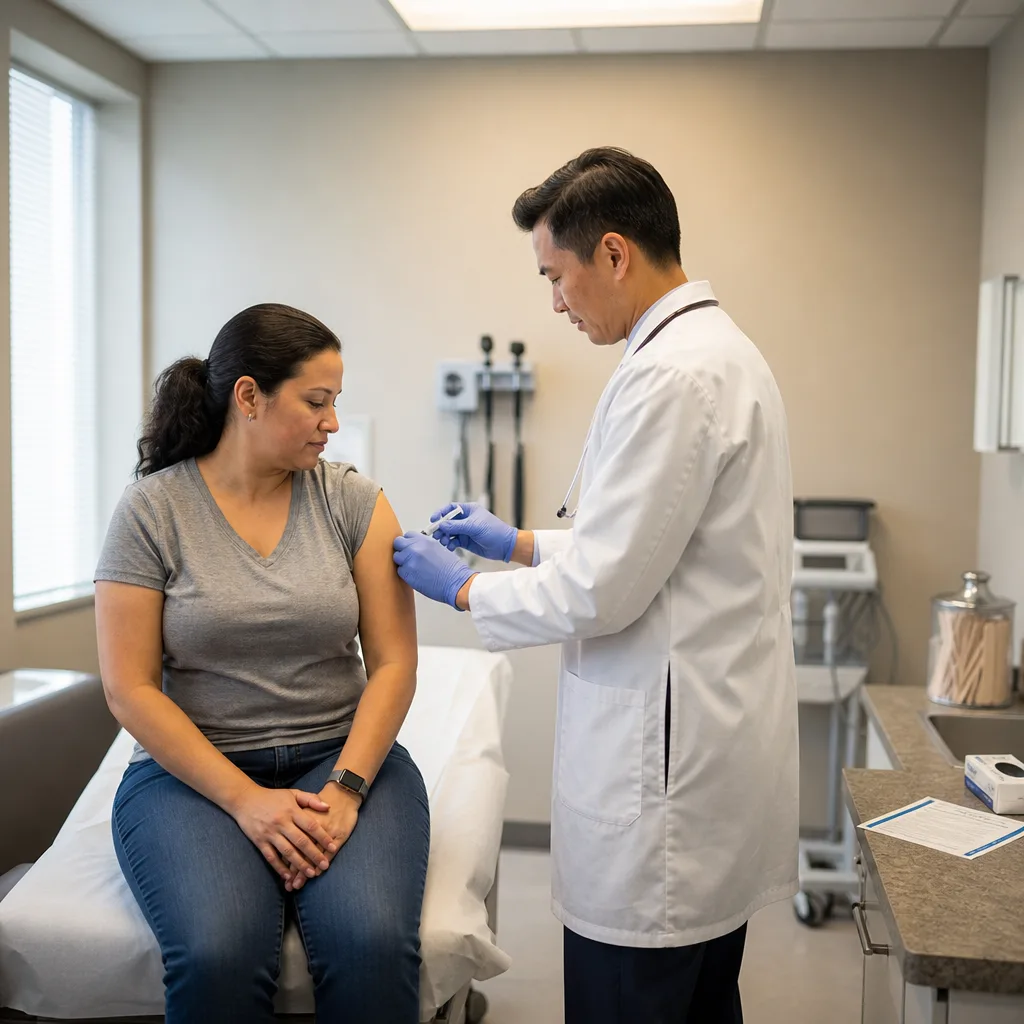
Almost everyone six months and older should get a flu shot each fall. The people who gain the most are young kids, adults over 65, pregnant women, and anyone living with a long-term condition like diabetes, asthma, or heart disease. A short list of situations calls for a conversation first, and we'd rather you ask than guess.
The simple version: if you're six months old or older, the flu shot is meant for you. That includes healthy adults who almost never get sick. Many skip it, figuring they'd shake off the flu in a few days. Many would. The catch is that you can pass it to someone who can't.
Some people have more on the line than others. If you're in one of these groups, the flu shot isn't a nice-to-have:
- Adults 65 and older. The immune system slows down with age, and flu hits harder and lingers longer.
- Kids, especially under 5. Little kids catch more of everything and spread it fast through daycare and classrooms.
- Pregnant women. Pregnancy changes how the body handles infection, and the shot also passes some protection to the baby.
- Anyone with diabetes, asthma, COPD, heart disease, kidney disease, or a weakened immune system. Flu tends to knock these conditions off balance, and that's often what lands someone in the hospital, not the flu itself.
- People with a very high body weight, which makes breathing problems from flu more likely.
- Anyone who lives with or cares for a newborn, an elderly parent, or someone going through cancer treatment. Babies under six months can't be vaccinated at all. Your shot is their shot.
Here's a picture we hear often. A healthy 40-year-old in Greenwood Village works out four times a week and hasn't had a real fever in a decade. She skips the shot. Then her dad moves in after a hip surgery. That one change moves her from "probably fine either way" to "get the shot," because the risk was never really about her.
Now for the part nobody else wants to say out loud: a few people should hold off or talk it through first. If you had a serious allergic reaction to a flu vaccine in the past, that's a real reason to pause and get specific advice. If you've ever had Guillain-Barré syndrome, bring it up before you roll up your sleeve. If you're running a fever and feel genuinely lousy today, wait until you're back to normal. And if your child is under six months, the answer is no. Protect that baby by vaccinating the adults and older siblings around them.
According to the Centers for Disease Control and Prevention, an egg allergy used to land people on the "no" list.[1] It doesn't anymore. If you have one, say so, and we'll sort out the right product and setting instead of sending you home without protection.
One more group worth naming: adults who technically qualify for the standard shot but are creeping up on 65, or who've had a rough flu season before. Age isn't the only factor, and a quick look at your health history usually makes the choice obvious.
Flu Shot Timing: Early Season, Mid-Season, and Late Bookings
September and October are the sweet spots. Your body needs about two weeks after the shot to build up antibodies, so getting it done before Halloween means you're covered when flu starts circulating here. Colorado cases usually pick up in late November, climb through December and January, and often peak in February. That's a long window to be unprotected if you keep putting it off.
Can you go too early? A little. Protection fades over the season, and that fade matters most for adults 65 and older. If you get vaccinated in early August, you may be running on weaker protection by the time February hits, and February is often the worst month around here. For most healthy adults it's a small effect and not worth agonizing over. For older adults, aiming for late September through October makes more sense than knocking it out on the first warm-ish day of fall.
There's one group that shouldn't wait for the calendar. Kids between six months and eight years old who've never had a flu shot before need two doses, spaced about four weeks apart. They aren't fully protected until two weeks after the second one. Do the math backward from Thanksgiving and you'll see why September is the right month to start for a first-timer. Pregnant women are also better off going early in the season rather than late, since protection passes to the baby.
Now for the part people get wrong in the other direction. December is not too late. January is not too late. Neither is February. As long as the flu is still moving through the community, the shot still does something, and in a lot of Colorado seasons the second half is the rough half. We'd rather give you a late shot than none.
A few timing situations worth planning around:
- Traveling for the holidays? Get vaccinated at least two weeks before you fly. Airports and packed family houses are how the flu gets around.
- Heading somewhere tropical or to the southern hemisphere? Flu seasons run on different calendars there, and that's worth a quick travel medicine conversation.
- Due for an annual wellness exam this fall? Stack the shot onto that visit instead of making a separate trip.
- Just had the flu this season? You can still get vaccinated. There's more than one strain circulating, and recovering from one doesn't cover you for the others.
- Getting other vaccines, like a COVID booster or a shingles shot? You generally don't have to space them out, though it's worth asking how you handled shots in the past.
If you're not sure where your own health history puts you on the calendar, that's a two-minute question for a physician who already has your chart open.
Skip the Flu Shot If You're Already Sick
A sniffle isn't a reason to cancel. A fever is. That's the line we use, and it's the same line most clinics use, because the shot works fine when your body is fighting a minor cold but gets muddled when you're in the middle of something bigger.
Here's why it matters. Say you're running a temperature and you get vaccinated anyway. If you feel achy and wiped out the next day, nobody can tell you whether that was the vaccine or the illness you already had. You end up blaming the shot, and a lot of people who blame the shot never come back for another one. Waiting a few days protects your confidence in it as much as anything else.
Wait until you're better if any of these describe you today:
- You have a fever, whether you've measured it or you just know you're burning up.
- You feel genuinely sick, not just stuffy. Body aches, chills, no appetite, can't get off the couch.
- You're vomiting or can't keep fluids down.
- You started antibiotics in the last day or two for something like pneumonia or a bad sinus infection and you're still in rough shape.
Go ahead and get it if you've got a runny nose, a mild cough, a scratchy throat, or seasonal allergies acting up. Those don't interfere with anything. Neither is being on maintenance medication or having had a cold last week and still clearing the last of it out. Plenty of people talk themselves out of the shot over a cough that's been hanging around since the first cold snap, and that's a wasted fall.
What if you already have the flu right now? Then the shot isn't the move today. Rest, fluids, and a call to a physician if you're in a high-risk group, because antiviral medication works best when it's started early. Once you're back on your feet, get vaccinated. More than one strain circulates each season, and having had one doesn't cover you for the rest.
The mistake we want you to avoid is turning a two-week delay into a skipped season. Write the date on your calendar before you leave the house. Most people who feel lousy in October are fine by early November, and November is still a good month to be protected here. Colorado cases climb through December and peak well after that.
One more thing worth saying plainly. If you're sick enough to wonder whether you should postpone a shot, that's often worth a quick conversation on its own. It’s not because of the vaccine, but because of whatever’s making you feel that way.
What Happens During and After Your Flu Shot
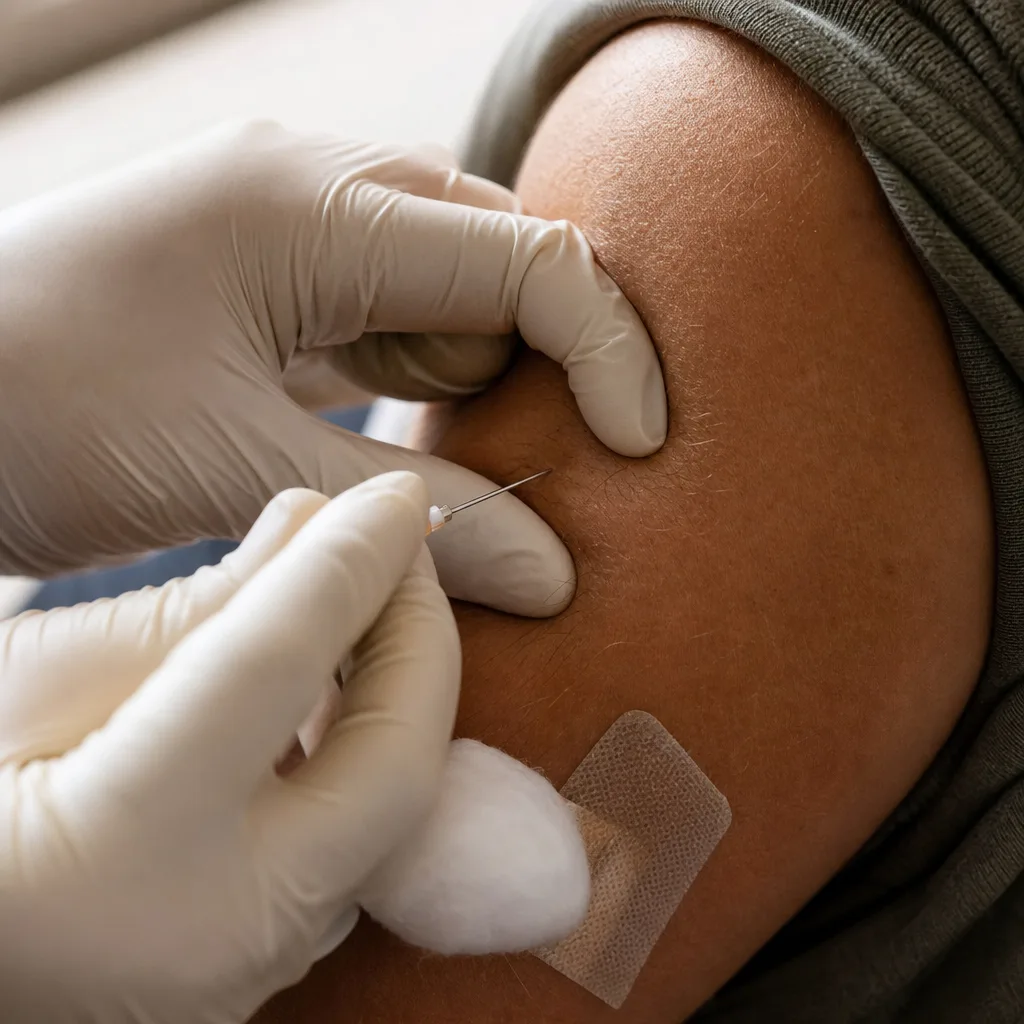
The shot itself takes about five seconds. Most of what people worry about happens in their head before they sit down, so here's the whole thing to start to finish.
Wear something with a sleeve that pushes up easily. A t-shirt beats a tight sweater. Eat something first and drink water, because people who faint at needles are almost always the ones who skipped breakfast. Pick the arm you use less. If you're right-handed, offer your left. That way a sore muscle doesn't get in the way of carrying groceries or sleeping on your usual side.
Before the needle goes in, you’ll go over your health history, current medications, and allergies, and whether you’ve had a bad reaction to a vaccine before. Bring up anything on that list even if you think it's old news. The shot goes into the muscle of the upper arm. It's a small needle and a small amount of fluid. A pinch, a couple of seconds of pressure, done. If needles make you lightheaded, say so up front and sit or lie down for it. There's no prize for toughing it out.
You'll be asked to stick around for roughly 15 minutes afterward. That wait isn't a formality. Serious allergic reactions to flu vaccines are rare, but when they happen they happen fast, and those minutes are when you'd want a physician in the room rather than in your rearview mirror on Arapahoe Road.
Here's what's normal in the day or two after:
- A sore, achy arm. This is the big one. It usually peaks the next morning and fades within two days.
- Some redness or a small firm lump right at the injection site.
- Feeling a little tired, headachy, or run down.
- A low-grade temperature or mild body aches in some people, especially kids.
None of that is the flu. The shot can't give you the flu. What you're feeling is your immune system doing exactly what you paid it to do. Move the arm normally instead of babying it, since keeping it still tends to make the soreness last longer. A cool cloth helps. So does an over-the-counter pain reliever if you already take one safely.
Call a physician if you get hives, swelling around the face or throat, trouble breathing, a racing heart, or dizziness that won't pass. Those signs are uncommon, and they show up quickly. Same goes for arm pain that's getting worse on day three or four rather than better.
Then give it two weeks. That's how long your body needs to build real protection, and nothing about that clock changes based on how you felt afterward. People who barely notice the shot are just as protected as the ones whose arm ached all weekend.
Pairing Your Flu Shot With an Annual Wellness Exam

A flu shot takes five seconds. The conversation around it is where the real value sits, and that conversation only happens if someone has your chart open.
Fall is when most people are due for an annual wellness exam anyway. Stacking the shot onto that visit saves you a second trip, but that's the small reason. The bigger reason is that a physician reviewing your blood pressure, your labs, and your medication list can notice things a quick vaccination stop can't. Your A1C drifted up. Your inhaler refills stopped six months ago. You mentioned you're short of breath on the stairs at the parking garage and figured it was just age.
Those details change what matters this flu season. Someone with poorly controlled diabetes or asthma isn't in the same position as a healthy 35-year-old, and flu is often what tips a managed condition into a hospital stay. A wellness exam is where that gets caught. The shot is almost the easy part.
Things worth raising while you're already in the room:
- Other vaccines you may be behind on. Adults over 50 and anyone with a chronic condition often have gaps they don't know about.
- Travel plans. If you're headed overseas this winter, travel vaccinations and a travel medicine conversation take planning, not a last-minute stop.
- Chronic conditions that need a check-in. These include blood pressure, cholesterol, thyroid, and diabetes. Flu season is a fine excuse to look at all of it.
- Lab work you've been putting off. If you're already sitting down, blood work is a short add-on.
- Your kids. Pediatric visits and flu shots can run together, and first-timers under nine need two doses spaced out.
- An aging parent you're caring for. Senior care and vaccination timing get more specific after 65.
This is where a small practice does something a high-volume setting can't. We cap our panel at 200 patients on purpose. That means Dr. Grenardo isn't meeting you for the first time at the moment the needle comes out. He knows what your numbers did last year, what you've been trying to fix, and what you told him you were worried about in April. A family medicine background is most useful when it's pointed at one person's actual history instead of a general recommendation.
A retail counter can give you a perfectly good flu shot. What it can't do is connect that shot to the rest of your health, ask a follow-up question, or call you in January when something looks off. If all you need is the vaccine, go get it anywhere. If you want it to be part of a plan, book it with a physician.
Frequently Asked Questions
Can you get a flu shot and a COVID booster at the same visit?
Yes, you generally don't need to space them out. It's still worth mentioning how you handled shots together in the past, so bring that up when you go over your health history.
How long does soreness in the arm usually last after a flu shot?
A sore arm usually peaks the next morning and fades within two days. Moving the arm normally instead of keeping it still helps the soreness clear faster. If arm pain is getting worse by day three or four instead of better, that's worth a call.
Is it worth getting a flu shot if you already had the flu this season?
Yes, because more than one flu strain circulates each season. Recovering from one strain doesn't protect you against the others, so vaccination still adds real protection.