
What Pediatric Care Covers at OG Health
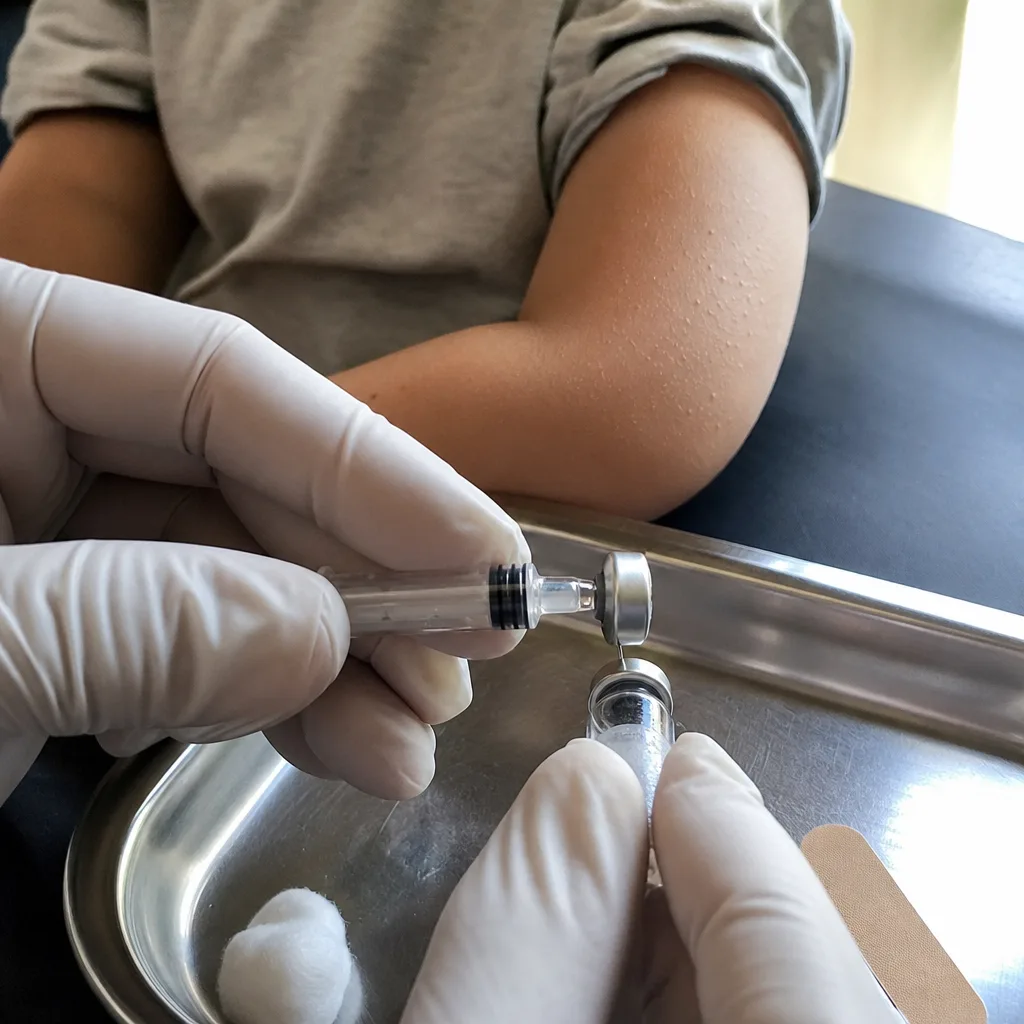
Pediatric care here covers the everyday stretch of childhood health: well-child and physical exams, immunizations, sick visits for the things kids catch, and ongoing conditions like asthma that need a doctor who remembers the last flare. It also covers the teenage years, when health questions get more private and more complicated. Because Dr. Grenardo is a family physician, the same doctor can care for your child and for you.
Most of what kids need falls into a handful of buckets, and we handle them in one place. Well visits and physical exams are the backbone. That's where growth gets tracked and development gets checked. The small things that worry you get a real answer instead of a two-minute brush-off. Sports physicals fit here too. In Colorado, those tend to pile up right before fall and spring seasons start. It helps to think about them a few weeks ahead instead of the night before a form is due.
Immunizations are part of the same rhythm. Routine childhood shots, flu shots each fall, and travel vaccinations if your family is heading somewhere that calls for them. Keeping those records with the same physician who does the well visits means nobody's hunting through three portals to figure out what your child already got.
Then there's the part parents lose sleep over. Sick kids. We see same-day sick visits for the usual suspects: ear infections, strep throat, sinus infections, colds and flu, skin rashes, urinary tract infections, and the scraped-up knees and minor injuries that come with being eight years old. Strep testing gets done as part of that visit rather than as a separate errand. Telehealth visits work well for the ones where you mostly need eyes on your kid and a plan, not a drive across town.
- Well-child visits, physical exams, and sports physicals
- Childhood immunizations, flu shots, and travel vaccines
- Same-day sick visits for ear infections, strep, sinus infections, cold and flu, rashes, and UTIs
- Minor injury and wound care
- Asthma treatment and other ongoing condition management
- Adolescent health services and behavioral health support, including anxiety and depression
- Lab testing and blood work when a symptom needs more than a look
- Specialist referrals and care coordination when your child needs someone beyond primary care
Chronic conditions get the same continuity. Asthma is the common one in kids, and Colorado's dry air, spring pollen, and winter cold snaps all tend to stir it up. Managing that well means a doctor who can compare this winter to last winter without reading a chart cold. Same goes for allergy testing consultations, thyroid testing, or anything else where the pattern over time matters more than a single number.
Teenagers get their own kind of attention. That includes adolescent health services, behavioral health support, counseling for anxiety and depression, and conversations a 16-year-old will only have with a doctor they've known for years. That trust doesn't get built in a walk-in clinic.
The thread running through all of it is the 200-patient limit. A small panel is what makes it realistic for one physician to know your child's history and your family's history. It's the difference between a kid who always runs a little warm and a kid who's genuinely sick.
Family Medicine Doctors Can Treat Children, Not Just Adults
A lot of parents assume there's a hard line: kids go to a pediatrician, grown-ups go to a family doctor, and that's just how it works. It isn't. Family medicine is built to cover the whole age range. Dr. Grenardo is board certified in family medicine and a Fellow of the American Academy of Family Physicians, trained to care for patients from childhood through old age.
That means the same physician who checks your daughter's ears in February can handle your own blood pressure check in March. Your teenager's sports physical and your annual wellness exam can live in the same practice, with the same doctor, who already knows both of you.
Here's why that matters more than it sounds. Health runs in families. When a child shows up with wheezing, one of the first useful questions is whether asthma or allergies run in the household. When a teenager's thyroid numbers look off, knowing that mom has a thyroid condition changes how seriously you take a borderline result. A doctor who treats the parents doesn't have to ask. He already has that picture.
The same thing shows up with mental health. Anxiety and depression often cluster in families. A physician who's been talking with a parent about stress or sleep for two years reads a quiet fifteen-year-old differently than someone meeting that kid for the first time.
There's a practical side too. Families with two or three kids and two working parents are usually juggling more than one office, more than one portal, and more than one phone tree. Consolidating that into one practice cuts out a real amount of friction. One number to call. One doctor who knows who everyone is.
- Family history is already in the room, not something you have to remember to mention
- Your child doesn't get handed off to a new doctor at 18 and have to start over
- Coordination is simpler when one physician is tracking the whole household
- Siblings can often be seen around the same time instead of on separate days
The transition point is worth calling out. According to the Academy of Family Physicians, traditional pediatric practices discharge patients somewhere around 18 to 21, right when a lot of young adults are starting college, moving, or losing track of their own care.[1] That's a bad moment to lose a doctor. With family medicine, there's no transition. The same physician who gave your son his kindergarten shots can be the one managing his cholesterol at 30.
None of this is a knock on pediatricians. Some children genuinely need pediatric subspecialty care, and when that's the case, a referral to the right specialist is part of the job. But for the ordinary work of keeping a healthy kid healthy, and catching the things that aren't ordinary, a family physician is fully equipped for it.
Why a Small Patient Panel Means Your Child Sees the Doctor, Not Just Staff
In a lot of practices, a single doctor's name sits on a panel of two thousand patients or more. The math decides everything after that. Your call gets triaged by someone who's never met your kid. Your appointment gets slotted wherever there's a gap. And the person who walks in the room may not be the doctor whose name is on the door.
OG Health caps the panel at 200 members on purpose. That's the whole design. Dr. Grenardo isn't trying to see more patients faster. He's trying to know fewer patients well, and with a child, that difference shows up fast.
Think about what a sick visit requires. Your six-year-old has had a fever for two days and now says his ear hurts. You don't need a stranger to guess. You need someone who knows he's had two ear infections before, knows how he responds to them, and knows that you're not the parent who calls about every sniffle. That context is the difference between a real answer and a shrug with a prescription attached.
The same thing applies when nothing obvious is wrong. A lot of childhood worry is quiet. A kid who's lost weight without trying. A teenager who stopped playing soccer and won't say why. Those things don't announce themselves in a rushed appointment. They surface when a doctor has room to ask a second question and then wait for the answer.
A small panel is what makes these things possible instead of aspirational:
- You reach Dr. Grenardo directly by phone or text, instead of leaving a message with a service and waiting for a callback from someone who has to read the chart first
- Visits aren't rushed, so there's time to bring up the thing you almost didn't mention
- The doctor who saw your child last winter is the doctor seeing her this winter, so comparisons are real and not guesswork
- Your child's history lives in one physician's memory, not scattered across a rotating cast of providers
- Care coordination and specialist referrals come from someone who knows what your child needs, not from a generic list
Continuity matters more with kids than almost any other group, because children change constantly. Growth, development, behavior, sleep, appetite. A single snapshot tells you almost nothing. The pattern tells you everything. Reading that pattern takes a doctor who's been watching it.
There's also the trust piece, and it's not small. Kids figure out quickly whether the person examining them is paying attention. So do teenagers, who are deciding whether this is a doctor they'll be honest with about anxiety, sleep, or anything else they don't want to say in front of a parent. That kind of relationship gets built over years with the same face in the room.
When Ongoing or Complex Child Health Issues Need Continuous Attention
Some childhood problems are one and done. A kid gets strep, takes the antibiotic, and you never think about it again. Other problems don't work that way. They stretch across seasons and years, and they only make sense if somebody's watching the whole arc.
Asthma is the clearest example. A child who wheezes in March and again in November isn't having two unrelated episodes. That's a pattern, and the pattern is what tells you whether the current plan is working. Along the Front Range, the triggers stack up in predictable ways. Dry air pulls moisture out of airways year-round. Spring grass and tree pollen hit hard. Cold snaps in January send kids from a heated house into single-digit air, and some children start coughing before they get to the car. A doctor who knows your child had a rough winter last year reads this winter's cough differently than someone seeing the chart for the first time.
The same logic covers a lot of ground. A teenager whose thyroid numbers sit just outside normal. A child with recurring stomach trouble that nobody's connected to anything yet. A kid who keeps getting the same infection and you're starting to wonder if something else is going on. None of these get solved in a single fifteen-minute slot. They get solved by checking, waiting, checking again, and comparing.
Here's where continuity does real work for your child:
- Asthma that shifts with the season, where the question is whether the plan needs adjusting or whether this year was just a bad pollen year
- Allergy testing consultations, when symptoms keep coming back and you want to know what's driving them
- Lab testing and blood work that only means something compared to last year's numbers, not on its own
- Anxiety and depression in older kids and teens, where the same physician has been in the room long enough for honesty to be possible
- Medication management, so doses get revisited as your child grows instead of running on autopilot
- Specialist referrals and care coordination when a child does need pediatric subspecialty help, with someone tracking what comes back
The referral piece deserves a word. Some kids need a pediatric cardiologist, a pediatric neurologist, or another specialist, and that's not a failure of primary care. It's part of the job. What matters is what happens after. Reports come back, recommendations get made, and somebody has to fold that into your child's ongoing care instead of letting it sit in a file. That's the coordination work, and it's easier when one physician is holding the whole picture.
Telehealth fits naturally into this kind of care too. When you're checking in on how a med change is going, or your kid has a rash you want looked at before deciding whether it's worth a trip, a video visit answers the question without rearranging your afternoon.
The reason any of this holds together is the small panel. Following a child's asthma across four winters takes a doctor with the room to remember. So does noticing that a quiet teenager has been quiet for longer than usual. That's what capping the practice at 200 members is for.
When Your Child Needs a Pediatric Specialist Instead
Not every child belongs in a family medicine practice. That's worth saying out loud, because the wrong fit costs you time you don't have when your kid is sick.
Newborns are the clearest case. A baby in the first weeks of life needs frequent weight checks, feeding support, jaundice monitoring, and close follow-up on anything that came up at delivery. Many families are better served by a pediatric practice built around that schedule, and a lot of hospitals set up that first visit before you leave. If you already have a pediatrician handling your infant, keep them.
Children born very early or with a heart condition, a genetic diagnosis, a seizure disorder, or a complex airway issue generally need pediatric subspecialty care as the center of the plan. A pediatric cardiologist or pediatric neurologist isn't a backup for primary care. For those kids, that specialist is the main event, and primary care works around it.
Then there's the stuff that can't wait for any office. Call 911 or head to the nearest emergency department when you see:
- Trouble breathing, ribs pulling in with each breath, or blue or gray lips
- A fever in a baby under three months old
- A child who's hard to wake, limp, or not responding normally
- A seizure, especially a first one
- A stiff neck with fever, or a rash that looks like bruising and doesn't fade when you press on it
- Signs of real dehydration: no urine for many hours, no tears, a dry mouth, sunken eyes
- A head injury with vomiting, confusion, or loss of consciousness
- A broken bone with obvious deformity, or a deep wound that won't stop bleeding
None of that is a phone call and a wait. Go.
There's also a whole category where you don't need a doctor at all. A garden-variety cold runs its course in a week or so, and there's no medicine that shortens it. A single day of low-grade fever in an otherwise fine kid who's drinking, playing, and sleeping is usually just a virus doing what viruses do. A scraped knee that stops bleeding after a few minutes needs soap, water, and a bandage. Mild hand-foot-and-mouth, a tooth-eruption fever, the two-day stomach bug that resolves on its own. Rest and fluids beat an appointment for most of those.
The Front Range adds one wrinkle. At Greenwood Village's elevation, the air is dry enough that kids get nosebleeds, dry coughs, and chapped skin in winter with nothing wrong. A humidifier in the bedroom and more water handles most of it.
Where a family physician earns their keep is the middle ground: the kid who's been coughing for three weeks, the fever that keeps returning, the teenager who isn't himself, the recurring infections that might be a pattern. If your question is whether something's normal for your child specifically, that's exactly the kind of thing continuity answers.
Frequently Asked Questions
How far ahead should I book a sports physical?
Book a few weeks before tryouts, not the night before the form is due. In Colorado, sports physicals pile up right before fall and spring seasons start, so slots fill fast. Getting ahead of it means your child isn't scrambling to turn in paperwork at the last minute.
Can my teenager talk to the doctor privately about anxiety or depression?
Yes, adolescent behavioral health support is part of the care offered here. Teenagers often only open up to a doctor they've known for years, which is why continuity matters so much during those years. A physician who's tracked your family's history over time tends to notice when a quiet teenager has been quiet longer than usual.
Is a telehealth visit good enough for a sick child, or do we need to come in?
Telehealth works well when you mostly need eyes on your kid and a plan, not a hands-on exam. It's a good fit for checking a rash before deciding on an in-person trip, or following up on how a medication change is going. For things like strep testing, you'd still come in since that's done as part of the visit.