
Deciding If an Ear Infection Needs a Doctor Visit
Not every earache needs a visit, and some mild ones ease on their own. You can't see inside your own ear, though, so pain that's strong, keeps getting worse, or comes with other signs is worth a doctor's look. A quick exam tells you what's going on, so you're not guessing.
Most people wait on an earache because they don't want to make a fuss. That's fair. Ear pain is common, and plenty of it clears up without any treatment at all. A stuffy nose from a cold can leave your ear feeling full and sore for a few days, then it fades as the cold does.
The hard part is that ear pain feels about the same no matter what's causing it. Fluid behind the eardrum, an infection in the middle ear, swimmer's ear in the outer canal, and pressure from blocked sinuses can all hurt in a similar way. Pain can even come from your jaw or a sore throat and show up in your ear. Each of these is handled differently, and you can't tell them apart from the outside.
Here's the honest answer on when it may be fine to hold off for now:
- The pain is mild and started with a cold or allergies.
- You or your child are eating, sleeping, and acting mostly normal.
- The ache feels better on its own rather than worse.
- There's no drainage coming out of the ear and no change in hearing.
If that sounds like your situation, watching it for a bit is a reasonable choice, and you don't need to feel rushed into an appointment. If it doesn't settle down, that's your cue to have it checked.
It's a different story when the picture changes. Call a doctor if the pain is strong or keeps building, if there's fluid or pus coming out of the ear, if hearing seems muffled, or if there's a fever along with it. The same goes for ear pain that keeps coming back and pain in a baby or young child who can't tell you what's wrong. It also applies to earaches in anyone with a health condition that makes infections harder to fight. Dizziness, swelling behind the ear, or a stiff neck need attention right away.
Think about a parent at 9 p.m. with a toddler who keeps pulling at one ear and won't settle down. There's no way to know from the couch whether it's fluid from a cold or an infection that needs treatment. That's exactly the moment when a doctor looking into the ear gives you a real answer instead of another night of worrying.
If you're a member of OG Health in Greenwood Village, you don't have to sort this out alone. The practice keeps its panel to 200 members and offers direct physician access by phone, text, and secure messaging. That means you can describe what you're seeing to Dr. Grenardo, who already knows your family's history, and decide together whether it's time to come in. Same-day sick visits and house call visits are also among the services the practice lists.
Why Antibiotics Are Not Always the Answer

A lot of people call about an earache hoping to walk away with a prescription. That makes sense. According to the National Institute for Health and Care Excellence, antibiotics feel like the thing that fixes an infection, and when your ear hurts or your child is miserable, you want something that works fast.[1] The truth is that many ear problems don't need antibiotics at all, and some won't get better one bit faster with them.
Antibiotics only work on bacteria. They do nothing against viruses. A lot of earaches start with a cold, and the cold is caused by a virus. In those cases, the ear pain and fullness often ease as the cold clears. Fluid can also sit behind the eardrum for a while after a cold without being infected. It can feel plugged and uncomfortable, but it usually drains on its own over time. An antibiotic won't speed that up.
Even a true bacterial infection in the middle ear doesn't always call for antibiotics right away. Many mild ones clear up as the body fights them off. That's why a doctor may suggest watching it for a short time with a clear plan for pain relief and a clear point to check back if things don't improve. It isn't brushing you off. It's picking the treatment that fits what's going on.
Taking antibiotics you don't need isn't harmless, either. Here's what can come with them:
- Upset stomach, diarrhea, or a rash, which can make a sick kid feel even worse
- Allergic reactions, some of them serious
- Germs that learn to resist antibiotics, so the medicine works less well the next time you truly need it
- Disruption of the healthy bacteria in the gut
Then there are ear problems where the usual pills just aren't the right tool. Swimmer's ear lives in the outer ear canal, not behind the eardrum, so it's treated differently from a middle ear infection. Pain that comes from blocked sinuses, the jaw, or a sore throat won't respond to an ear treatment at all, because the ear was never the real problem. Guess wrong, and you can spend a week on the wrong medicine while the real cause keeps bothering you.
This is the whole reason a look inside the ear matters so much. The eardrum shows a doctor a lot. It shows whether it's red and bulging, whether fluid sits behind it, whether the canal is swollen, or whether everything looks healthy and the pain is coming from somewhere else. That one look decides the treatment. Sometimes it's an antibiotic. Sometimes it's drops, a pain plan, or simply time. The answer comes from what's there, not from a hunch.
If you leave without a prescription, that isn't a failed visit. It means you found out what's really going on and skipped a medicine that wouldn't have helped. For OG Health members, it also means that if the ear doesn't turn the corner, you can reach Dr. Grenardo directly instead of starting over with someone new. If the ear needs antibiotics after all, you'll know it's for a real reason.
What Happens During an Ear Infection Visit

An ear infection visit is usually short and simple. Most of it is talking, plus one close look inside the ear. Knowing what's coming can take the edge off, especially if you're bringing in a child who's already tired and cranky.
It starts with questions. They aren't small talk. Your answers help point toward the cause before the exam even begins. Expect to hear things like:
- When did the pain start, and is it in one ear or both?
- Has there been a recent cold, allergies, or a sore throat?
- Any fever, fluid coming from the ear, muffled hearing, or dizziness?
- Has anyone been swimming or gotten water in the ear lately?
- How many ear infections have there been before, and were antibiotics used recently?
- Are there any medicine allergies?
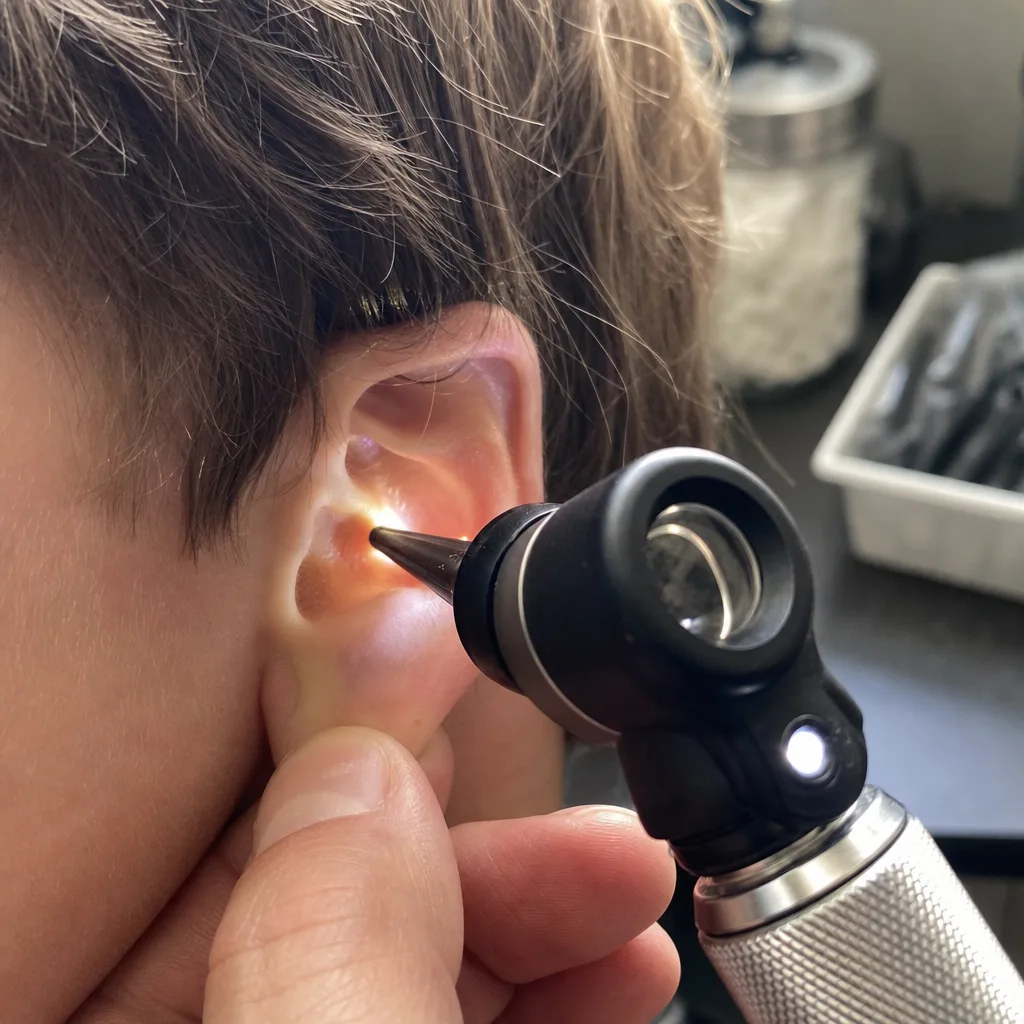
Next comes the part that matters most. The doctor uses a small lighted tool called an otoscope to look down the ear canal at the eardrum. It only takes a few seconds per ear. It can feel a little strange. An outer ear that’s already sore may be tender when it’s touched, but the look itself shouldn’t hurt much. Both ears often get checked, even if only one hurts, so the doctor has a healthy side to compare against.
The doctor may also look at the throat, feel the neck and the area around the jaw, and press gently around the ear. That's how pain that isn't really coming from the ear gets caught, so you don't end up treating the wrong thing.
If you're bringing a small child, holding them snugly on your lap can make that quick look easier for both of you. Kids tend to relax when they know it'll be over fast.
Before you leave, you should know three things. You should know what's causing the pain, what the plan is, and what signs would mean it's time to check back. If you don't hear all three, ask. A good visit ends with you knowing what to watch for tonight and tomorrow, not just holding a slip of paper.
A little prep helps the visit go faster and gives the doctor a clearer picture. Try to bring or jot down:
- Any medicines you've already tried for the pain, and when the last dose was
- Temperature readings, with the times you took them
- When the symptoms started and whether they're getting better or worse
- Notes on sleep, eating, and any fluid you've seen from the ear
At OG Health in Greenwood Village, the person looking in that ear is Dr. Oswaldo Grenardo, a Fellow of the American Academy of Family Physicians with over 30 years of clinical and executive healthcare experience. Since he already knows your family's history, the questions above can get to the point faster, and the plan can fit the person in front of him.
Ear Infections in Children Versus Adults

Ear infections are mostly a kid thing, but adults get them too. The two look pretty different, and that difference changes what you should watch for at home.
Kids get more ear infections because of how their ears are built. A small tube called the eustachian tube runs from the middle ear to the back of the throat. Its job is to let air in and fluid drain out. In young children, that tube is shorter and flatter than it will be later. When a cold makes it swell, fluid gets trapped behind the eardrum more easily, and germs have a warm place to grow. Kids also catch more colds, especially once they start daycare or school, so they get more chances for this to happen.
As children grow, the tube gets longer and tilts downward, so it drains better. That's a big reason many kids have fewer ear infections as they get older, even if they had a lot of them as toddlers.
The tricky part with young children is that they often can't tell you their ear hurts. Instead, you may notice things like these:
- Tugging, rubbing, or holding one ear
- Fussiness or crying that's worse when lying down
- Trouble falling asleep or waking up more than usual
- Not wanting to eat or drink, since sucking and chewing can hurt
- Not responding to quiet sounds or seeming off balance
None of these proves an infection. A teething baby may pull at their ears too, and a tired toddler can be cranky for no clear reason. That's why guessing is so hard with little ones, and why a quick look at the eardrum is worth so much.
In adults, a true middle ear infection is less common, so ear pain is more likely to come from something else. Swimmer's ear, a blocked sinus, allergies, a sore throat, or jaw tension can all show up as an earache. Adults can usually describe the pain better, like whether it's deep inside, sore when the outer ear is touched, or worse when chewing. Those details help, but they still don't show what the eardrum looks like.
When an adult does get a middle ear infection, it often follows a cold, a sinus flare, or allergy season. Ear trouble that keeps coming back in a grown-up, or fluid and fullness that won't clear on one side, deserves a closer look instead of being written off as just another earache.
Families often end up with the same question at every age: is this really the ear, or is it something else? OG Health cares for patients of all ages, so parents, kids, and grandparents can see the same physician. Dr. Grenardo already knows who's had ear trouble before, who has allergies, and who tends to catch every cold going around, and that history helps the exam land on the right answer faster.
When Symptoms Can Wait and When to Get Seen Today
Deciding to wait isn't the same as ignoring it. Watching an earache works best when you give yourself a clear point to decide, rather than hoping it just goes away. The question isn't only how bad it hurts right now. It's which way things are heading.
Here's what watching it well looks like:
- Pick a check-in time, like tomorrow morning or after the next night's sleep, and decide then
- Write down temperatures and the times you took them
- Notice whether sleep and eating are getting easier or harder
- Keep track of which ear hurts, and whether it's the same one
- Note any new symptom, even a small one
If your notes show things easing, you're on the right track. If they show the same ache day after day with no change, that's worth a call too. An earache that just sits there isn't clearly getting better, and you don't have to keep waiting to find out.
It's time to get seen today when the trend turns the wrong way. That might mean the pain is waking you or your child up when it didn't before. It might mean a fever shows up on day two, or the other ear starts hurting. It might mean fluid appears on the pillow in the morning. Any of the warning signs from earlier, showing up after a quiet start, means it's no longer a wait-and-see situation.
The right-away signs, like dizziness, swelling behind the ear, or a stiff neck, aren't a question about booking a visit. Get emergency care for those.
Then there's the gray zone, where nothing is alarming but timing still matters. Maybe it's Friday afternoon and you'd rather not spend the weekend wondering. Maybe you have a flight coming up, a big game, or a family trip, and you want to know what you're dealing with before you go. Or picture an adult whose ear has felt full and plugged since a cold ended last week. It isn't painful, but it isn't clearing either. None of these are emergencies, but each one is a fair reason to have the ear looked at sooner rather than later.
The goal is simple. You want a real answer before a small problem turns into a long night, a ruined weekend, or a missed trip. Getting checked early doesn't commit you to a prescription. It just replaces guessing with knowing.
For OG Health members in Greenwood Village, the gray zone is easier to handle. The practice offers direct physician access by phone, text, and secure messaging, and it lists same-day sick visits, same-day appointments, and after-hours physician access among its services. You can tell Dr. Grenardo what your notes show and decide together whether today is the day to come in.
Frequently Asked Questions
How long does an ear infection usually last?
Many ear infections start easing within a few days, especially mild ones tied to a cold. Fluid behind the eardrum can take longer to clear, sometimes a couple weeks, even after pain fades. That's why keeping notes on sleep, eating, and pain helps you spot whether things are trending better or just sitting the same.
Can an ear infection go away without antibiotics?
Yes, many do. A lot of research starts with a viral cold, and antibiotics don't work on viruses at all. Even a true bacterial middle ear infection is often mild enough that the body clears it on its own with a short watch period, pain relief, and a clear plan for checking back if it doesn't improve.
What can be mistaken for an ear infection?
Several things can feel like an ear infection but aren't. Swimmer's ear in the outer canal, blocked sinuses, a sore throat, and jaw tension can all cause pain that seems to come from the ear. Since these feel similar from the outside, a look at the eardrum is the only way to tell which one you're dealing with.