A Health Risk Assessment Is Not the Same as Your Annual Physical
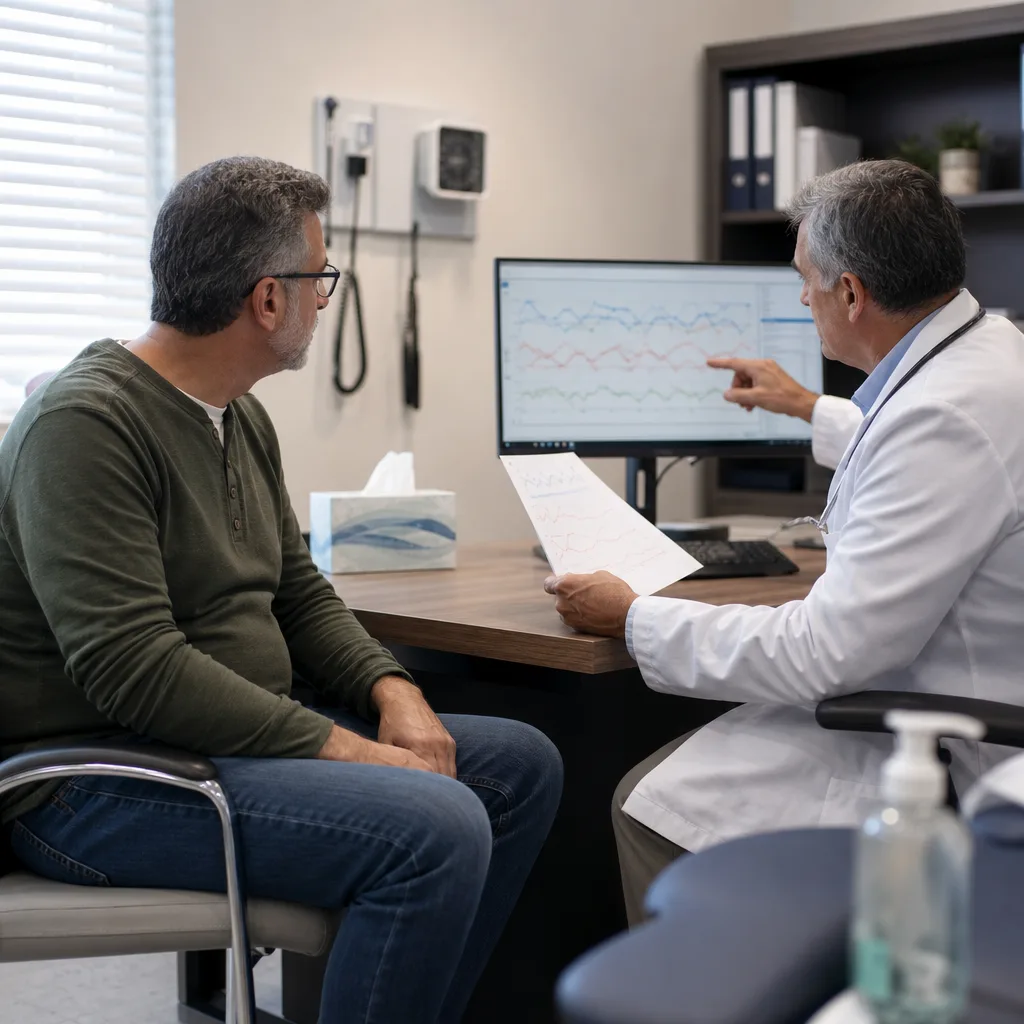
A physical checks how your body is doing today. A health risk assessment looks at where your health is heading, using your family history, habits, and lab trends to find the problems you're most likely to face. The two work well together, but they answer different questions.
A physical asks one main question: how are you right now? Your doctor checks your blood pressure, listens to your heart and lungs, looks at your weight, and orders standard labs. If your numbers land in the normal range, you're told you're in good shape. For a lot of people, that's where the conversation ends.
Here's the problem. Normal today doesn't mean low risk tomorrow. Say your cholesterol sits just inside the normal line. Your dad had a heart attack at age 52. You sleep about five hours a night, sit most of the workday, and your blood sugar has crept up a little each year. On paper, each of those things might look fine by itself. A physical can pass you. A health risk assessment puts those pieces side by side and asks what they add up to.
That's the real difference. A physical is a snapshot. A risk assessment is closer to a forecast. It weighs things a quick exam often skips, such as:
- Family history, including which relatives had heart disease, diabetes, cancer, or stroke, and how young they were
- Your own health history, past diagnoses, and medicines
- Daily habits like sleep, food, alcohol, tobacco, activity, and stress
- Mood and mental health, which affect physical health more than most people expect
- How your lab numbers have changed over the years, not just where they sit today
- Your age and stage of life, since risks shift in your 30s, 40s, 50s, and beyond
What you get from it is a clearer picture: what you're most at risk for, which of those risks you can change, and what's worth watching closely. That's also why testing matters here. At OG Health, lab work isn't one-size-fits-all. The practice offers routine and advanced precision lab testing tailored to your health goals and risk profile, so the tests follow the risks instead of a generic checklist.
This doesn't mean you should skip your physical. Our comprehensive annual wellness exams and executive-style physicals still matter. They catch what's happening now. A risk assessment adds the part a busy exam often doesn't have room for: the story behind your numbers and where they're headed.
Time is a big part of why that story gets missed. Connecting family history, habits, and years of lab results takes a real conversation. Dr. Oswaldo Grenardo limits OG Health to 200 members so he can give each patient unhurried, personal care and get to know them over time. That kind of ongoing relationship is what makes a risk assessment useful instead of just another form to fill out.
If you've been told you're fine but something still doesn't sit right, like a strong family history, numbers that keep drifting, or habits you know aren't great, that's a sign you'd get more from a risk assessment than from another routine checkup.
What a Health Risk Assessment Includes

A health risk assessment isn't one test. It's a set of pieces that fit together. Each one shows a different part of your health. On its own, a single piece doesn't tell you much. Together, they show where you're headed and what you can still change.
Most assessments start with questions. You'll be asked about your own health history, your family's health, and how you live day to day. These are the main areas they usually cover:
- Family history: heart disease, diabetes, cancer, or stroke in parents, brothers, or sisters, and how old they were when it started
- Your own history: past illnesses, surgeries, current medicines, and supplements
- Daily habits: smoking or vaping, alcohol, how much you move, what you eat, and how well you sleep
- Stress and mood: work pressure, family demands, and signs of anxiety or low mood
- Screenings: which cancer screenings, vaccines, and checkups you've had and which ones are due
Be honest here, even when it feels awkward. If you have three drinks most nights or sleep five hours, that matters more than almost any lab number. The questions only work if the answers are real.
Next come the numbers your body gives off. These often include blood pressure, weight, height, and waist size. According to the American Heart Association, waist size can say more about heart and blood sugar risk than weight alone, because fat around the middle carries more risk than fat stored elsewhere.[1]
Blood work usually fills in what you can't see or feel. A common starting set checks cholesterol, blood sugar, and sometimes thyroid, kidney, and liver function. High cholesterol and early diabetes often cause no symptoms at all. You can feel fine for years while the numbers slowly climb. That's exactly why they're worth checking.
At OG Health, lab testing is tailored to each person's health goals and risk profile, from routine panels to advanced precision testing. So a 35-year-old with a clean family history and a 55-year-old whose father had a heart attack at age 50 shouldn't get the same list of tests. Your answers to the questions help decide which labs are worth running.
The last piece is the one people skip, and it's the one that matters most: putting it all together. A number on a lab report doesn't mean much until someone looks at it next to your habits, your family, and your goals. Borderline cholesterol in a nonsmoker who runs is a different story than the same number in someone who smokes and has a family history of heart disease.
A good assessment ends with a short, clear plan. That might mean a habit to change, a screening to book, a medicine to consider, or simply a number to recheck in six months. If you walk away with a stack of results and no idea what to do next, the assessment didn't finish its job.
Who Benefits Most From an Assessment in Greenwood Village
Almost anyone can learn something from a health risk assessment. But some people get a lot more out of it than others. The biggest payoff comes when you feel fine today but have a reason to wonder about tomorrow. That's where catching a risk early can change the path you're on.
Here are the situations where it tends to matter most:
- You have a family history that worries you. Maybe a parent had a heart attack at age 55, or diabetes runs on one side of the family. You can't change your genes, but you can find out early if you're heading the same way.
- Your numbers are "borderline." A past doctor said your blood pressure, cholesterol, or blood sugar was "a little high, let's watch it." Watching isn't a plan. An assessment helps you decide if it's time to act.
- You haven't had a real checkup in years. Life got busy. You feel okay, so you skipped it. That gap is exactly when quiet problems grow.
- You're about to make a big health change. If you're thinking about medical weight loss or hormone therapy, it helps to know your starting point and your risks first.
- You're juggling several conditions or medications. When more than one thing is going on, it's easy for pieces to fall through the cracks between doctors.
Where you live and work plays a part too. Greenwood Village sits right in the Denver Tech Center corridor along I-25, and a lot of those jobs mean long hours at a desk, lots of meetings, and meals on the go. Sitting all day, stress, and poor sleep don't show up as symptoms right away. They show up years later in your blood pressure, your weight, and your blood sugar. An assessment looks at those habits, not just your lab results.
Colorado's high elevation matters as well. There's less air above you to block the sun, so UV exposure is stronger here than at sea level. If you hike, bike, ski, or golf a lot, sun exposure belongs in your risk picture, and a skin cancer screening may be a smart next step.
Age isn't the only trigger, either. A 35-year-old with a strong family history of heart disease may have more to gain than a 60-year-old with clean numbers and healthy habits. It's about your full story, not the number on your birthday cake.
This is also why the person reviewing your results matters. A score on a form doesn't help much if nobody talks it through with you. Dr. Grenardo is a board-certified family physician and a Fellow of the American Academy of Family Physicians with over 30 years of clinical and executive healthcare experience. Because OG Health limits its panel to 200 members, your assessment isn't a one-time handout. It becomes part of ongoing care with a doctor who knows you.
If your results point to something specific, like high cholesterol or a thyroid issue, that can lead into lab testing or chronic disease management so the findings turn into action.
When You Don't Need a Separate Assessment

Not everyone needs a Health Risk Assessment as its own visit. Sometimes the work is already done, and sometimes a different kind of visit fits better. Here's how to tell:
- You had a full physical or annual wellness exam in the last year, and it covered your family history, habits, labs, and goals. If nothing has changed since then, a second review won't tell you much new.
- You're on Medicare and just had your Annual Wellness Visit. That visit already includes a health risk questionnaire, so booking another one right after is usually repeat work.
- You already see your doctor on a regular schedule for a condition like diabetes, high blood pressure, or thyroid disease. Your numbers and risks are being tracked at each follow-up, so your risk picture is already on the table.
- You're young, you feel well, you have no strong family history of early heart disease, cancer, or diabetes, and you had a recent checkup with normal results. It's fine to wait until something changes.
- You're sick or hurt right now. A risk assessment looks ahead at years of health. It isn't the right visit for a fever, a bad cough, or a new pain. Get that problem looked at first.
What about the questionnaire your employer sent around? Those online wellness forms can be a decent starting point, but they're built for large groups, not for you. If you filled one out, talked the results over with your own doctor, and nothing stood out, you don't need to redo the whole thing. If you filled it out and never looked at it again, that's a different story. A form that no one reviewed with you hasn't done its job yet.
It also helps to be honest about why you're asking. If you mostly want reassurance and you've had solid, normal checkups, you may already have your answer. More testing doesn't always mean better care. Chasing extra lab work without a clear reason can lead to worry over results that don't matter.
A good rule of thumb: if your last checkup still describes your life today, you probably don't need a new assessment yet. If your life has changed and your last checkup hasn't caught up, you might.
So what counts as a real change? A parent or sibling gets a new diagnosis like heart disease, cancer, or diabetes. You've gained or lost a lot of weight. You've started a high-stress job, stopped exercising, or picked up a habit you're not proud of. You're about to hit an age where screening advice shifts, like 40, 45, or 50. Or it's simply been several years since anyone looked at the full picture of your health.
If none of that fits you, it's okay to skip this one for now. Keep up with your regular checkups, pay attention to your family's health news, and come back to the idea when something shifts. A risk assessment is most useful when there's something new to measure, and there's no prize for booking one before you need it.
What Happens After Your Results Come Back
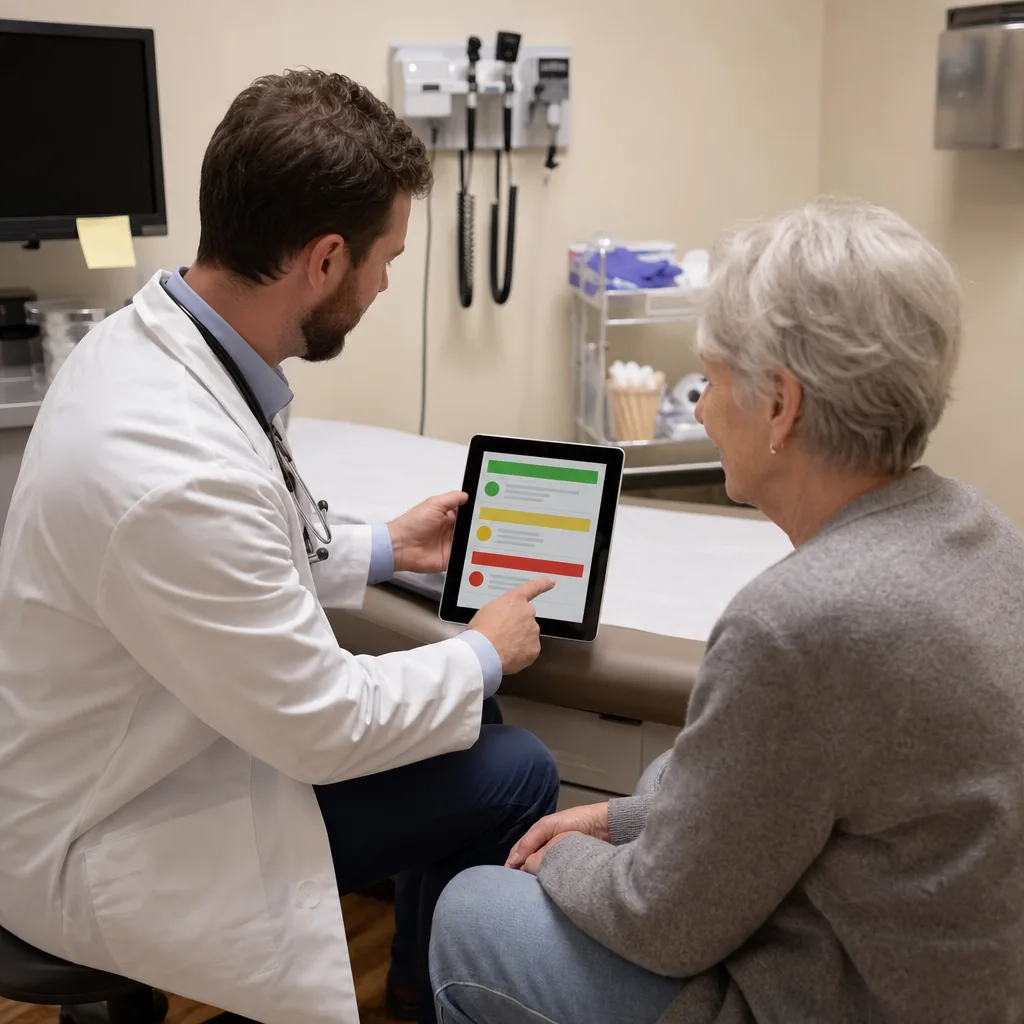
Results on their own don't change your health. What you do with them does. A risk score, a cholesterol number, or a note about family history only matters once someone sits down with you and turns it into a short list of things to do. That's the part of a Health Risk Assessment people skip, and it's the part that makes the whole thing worth your time.
Most results fall into one of three groups. Knowing which one you're in tells you how much needs to change.
- Low risk: Your numbers and habits look good. The plan is simple. Keep doing what works and set a sensible time to check again.
- Rising risk: Something is starting to drift, like blood pressure creeping up, blood sugar near the top of normal, or weight slowly climbing. This is the best time to act, because small changes now can keep a problem from ever starting.
- Higher risk: A result points to a condition that needs a closer look. That might mean more testing, starting treatment, or seeing a specialist.
Here's a common picture. You feel fine. Your assessment shows your fasting blood sugar and waist size are both edging up, and your father had type 2 diabetes. Nothing is wrong yet. But now you know where you stand, and you have a real reason to change how you eat and move before a diagnosis forces the issue. That's what a good assessment is for.
At OG Health, the follow-through connects to the care you'd get anyway. Depending on what your results show, your next steps might include:
- Routine or advanced precision lab testing tailored to your health goals and risk profile, so you're not guessing about what's driving a number
- Chronic disease management for blood pressure, cholesterol, diabetes, thyroid disease, or asthma
- Metabolic health support and weight loss management if weight is part of your risk
- Mental health support, since stress, sleep, and mood show up in physical risk too
- Thoughtful specialist referrals, with care coordination and medical advocacy so you're not left to sort it out alone
- Preventive screenings and wellness planning to keep the plan on track over time
Questions tend to come up after you leave, not while you're in the room. You might read your report at home and wonder what a number means or whether a symptom is related. Our practice offers direct physician access by phone, text, and secure communication, so you can ask Dr. Grenardo instead of searching online at midnight. Because the practice limits its panel to 200 members, the doctor who reviews your results is the same one who knows your history.
The goal isn't a thicker file. It's a clear plan you understand, with the next step already named, and a physician who'll still be there when you recheck.