
Comprehensive Health Evaluation Starts With a Full Picture

Contact OG Health to schedule a visit and find out which medical center service fits your current needs.
Say you haven't had a real checkup in four years. You feel mostly fine. But you don't know your numbers, your family history hasn't been reviewed since your twenties, and nobody's connected the dots. That's exactly what a comprehensive health evaluation is for.
This is the one thorough visit instead of three short ones. We go through your medical history, current symptoms, medications, family risk factors, and a physical exam in a single sitting. No stopwatch. For people working long hours in the DTC corridor, that matters. You're not blocking off four separate mornings to piece together a picture of your own health.
A comprehensive health evaluation usually covers:
- Full personal and family medical history review
- Physical exam and baseline vitals
- Review of every medication and supplement you take
- Screening recommendations based on your age and risk
- A clear summary of where you stand right now
This is the step people overthink. You don't need to prepare anything special or fix your diet first. You just need to show up and let us gather the information. Everything else on this page builds on what we find here.
Personalized Health Planning Turns Your Results Into Next Steps
The evaluation finds out where you stand. The plan decides what to do about it. They're a pair, and one doesn't replace the other.
A lot of people walk out of a physical with a printout and a vague instruction to eat better. That's not a plan. A health plan built for you takes the actual results: your cholesterol, your blood pressure, your sleep, your family history, and turns them into specific steps with a timeline and a follow-up date.
What that looks like in practice varies a lot. For one patient it might be a six-month push on blood pressure with monthly check-ins. For another it's a thyroid recheck, a sleep evaluation, and a plan for a stubborn cholesterol number. The point is that it's built off your data, not a printed handout that says the same thing for everyone who walks in.
We also set priorities. If there are five things worth addressing, trying to fix all five at once usually means fixing none of them. So we pick the two that move the needle most and start there.
Plans get revisited. Your body changes, your job changes, your labs change. A plan you never look at again isn't much better than no plan at all.
Longevity Medicine Focuses on the Years Ahead
What if the goal isn't just treating what's wrong today, but reducing what's likely to go wrong in twenty years?
That's longevity medicine. It uses data and testing to find risk early, well before it becomes a diagnosis, and builds protocols aimed at extending the number of healthy years you get, not just the number of years. Cardiovascular risk, metabolic health, hormone balance, inflammation markers. The stuff that quietly shifts over a decade while a standard annual physical says you're fine.
Longevity medicine and lifestyle medicine often get lumped together, and they do work well side by side. But they're different tools. Longevity medicine leans on testing and data to guide long-term optimization. Lifestyle medicine changes daily habits as the main treatment. One measures and targets, the other adjusts what you do every day.
This service tends to appeal to people in their forties, fifties, and sixties who feel healthy and want to stay that way. Greenwood Village skews older and health-conscious, and a lot of patients here have already watched a parent or sibling deal with something preventable. That tends to sharpen the motivation.
It's not a single appointment. It's an ongoing relationship where we track markers over time and adjust as your numbers move.
Lifestyle Medicine Works on What You Do Every Day
Lifestyle medicine treats your daily habits as the primary tool. Food, movement, sleep, and stress aren't side notes to the real treatment, in this approach, they are the treatment.
Where longevity medicine uses broad data and testing to guide long-term optimization, lifestyle medicine goes straight at behavior. Both can run at the same time, and often should.
This matters most for people managing something ongoing: high blood pressure, prediabetes, cholesterol, weight, poor sleep. Medication has its place, and we use it. But if someone sleeps five hours a night and eats lunch at their desk every day for a decade, no prescription fully fixes that.
Areas we usually work on together:
- Nutrition changes that fit your actual schedule, not an ideal one
- Movement you'll keep doing; the High Line Canal Trail counts
- Sleep timing and quality
- Stress patterns tied to work and travel
The trick is picking changes small enough to stick. I'd rather you change one habit and keep it for a year than overhaul everything for three weeks and quit. We adjust as we go, and we track whether it's showing up in your numbers.
Advanced Lab Testing Looks Past the Standard Panel
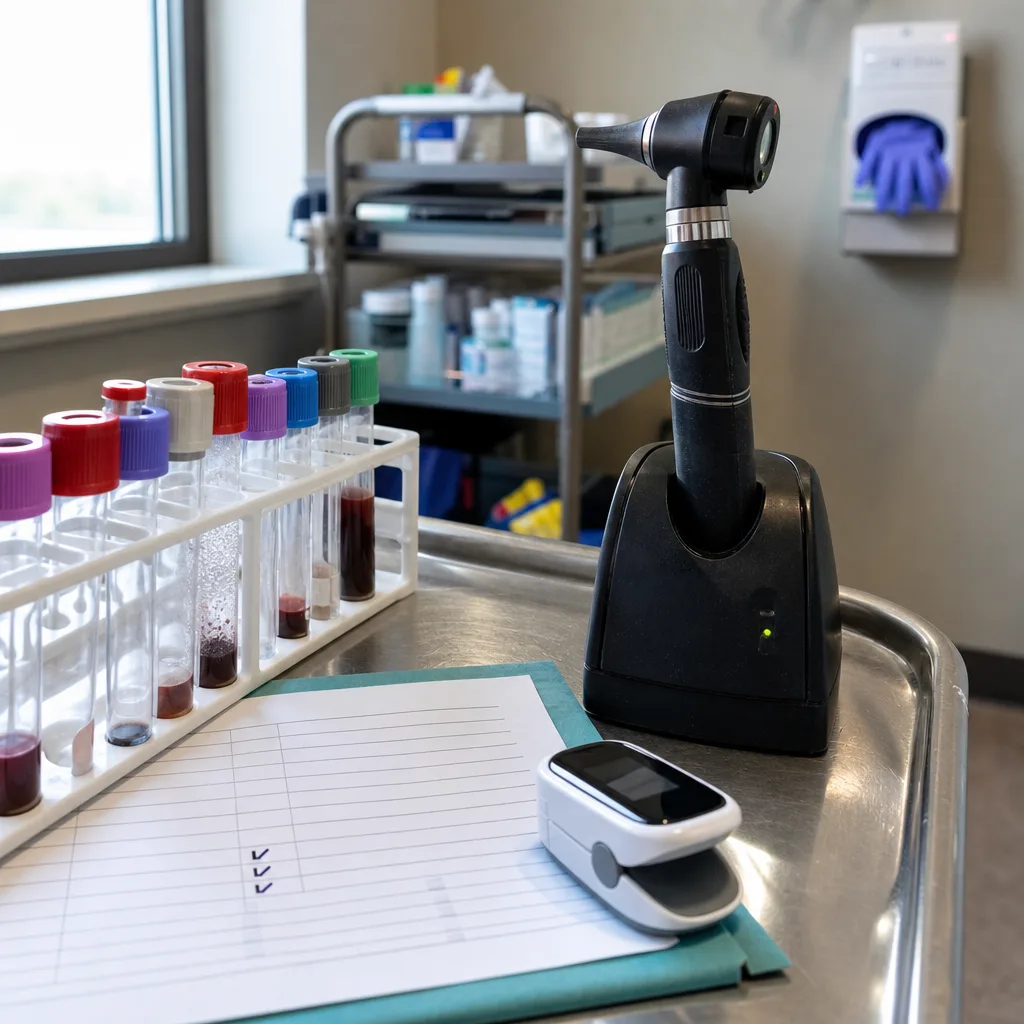
Your bloodwork came back normal and you still feel off. Tired all the time, foggy, gaining weight for no clear reason. That's a common starting point for advanced lab testing.
A typical annual physical panel covers a fairly narrow set of markers. Advanced lab testing goes wider and deeper: more metabolic markers, more detailed hormone and thyroid work, inflammation measures, nutrient levels. The idea is a fuller view of what's happening, not a pass or fail on a short list.
Here's the difference people get confused about. Advanced lab testing means more and deeper tests overall. Precision testing means specific tests chosen for your individual risk profile and goals. Same lab, different logic behind which tests get ordered.
Advanced lab testing helps most when something doesn't add up. It also helps as a baseline; having detailed numbers now makes it far easier to spot real change three years from now instead of guessing.
We go through the results together and explain what each one means for you. A page of numbers with no interpretation isn't worth much, and that's true no matter how many tests you ran.
Precision Testing Is Chosen for Your Specific Risk
Precision testing selects and interprets tests against your genetics, your history, and your goals. Advanced lab testing is the broader set of deeper tests available beyond a standard checkup. Precision testing is the narrower, more targeted version, chosen specifically for you.
When does that matter? A few common cases:
- A parent or sibling had early heart disease
- A specific symptom that keeps coming back without an explanation
- A strong family history of diabetes, thyroid disease, or certain cancers
- A health goal that needs baseline numbers before you start
In those situations, running a wide panel and hoping something jumps out isn't the smartest move. It's better to ask a sharper question. If your father had a heart attack at 52, we're looking at your cardiovascular risk markers with a lot more attention than we'd give a patient with no family history at all.
Interpretation is half the service. The same result can mean different things for two different people, depending on age, history, and what else is going on. That's why precision testing works best inside an ongoing relationship where someone already knows your story.
Care Coordination Keeps Your Specialists Connected
You've got a cardiologist, an endocrinologist, and a physical therapist. Three portals, three sets of notes, and nobody reading all of them. So the job of keeping it straight lands on you.
Care coordination moves that job back where it belongs. We track referrals, chase down records, read the specialist notes, and make sure one provider's plan doesn't collide with another's. It runs continuously, across years of care, not just around one event.
That's the line between care coordination and transitional care. Care coordination is ongoing. Transitional care is limited to one specific handoff, like leaving a hospital.
In the Denver metro, most patients already have relationships with one or more of the big hospital systems. The question usually isn't where to get care. It's who's paying attention to all of it at once. In a market full of large multi-location systems, that connective work often falls through the cracks between providers who don't talk to each other.
The concierge model makes this practical. With a panel capped at 200 members, there's actual time to read the notes and make the calls.
Medication Reconciliation Reviews Everything You Take
Medication reconciliation is a full review of every prescription, over-the-counter drug, and supplement you take, checked against each other for conflicts, duplicates, and doses that no longer make sense.
A lot of people assume this only happens at a hospital or a pharmacy counter. It doesn't have to, and it shouldn't. A primary care physician can and should own this on an ongoing basis, because we're the ones who see the whole list.
Problems show up more often than you'd think when prescriptions come from different providers. Two drugs in the same class from two different doctors. A medication started for a problem that was resolved two years ago. A supplement that interferes with a prescription nobody knew you were taking.
The fix is simple but it takes time. Bring everything, especially bottles, so that we can go through them item by item. We'll ask why each one was started, whether it's still doing what it's supposed to, and whether anything on the list is working against something else.
Then we do it again when things change. New prescription, new specialist, new hospital stay. Reconciliation isn't a one-time event, it's part of ongoing care.
Concierge primary care with Dr. Grenardo at OG Health in Greenwood Village.
Transitional Care Covers the Weeks After Discharge

The hospital sends you home with a folder, three new prescriptions, and instructions to follow up with your doctor. Then the real work starts, usually at your kitchen table.
Transitional care covers that stretch. Discharge planning, the first follow-up visit, sorting out which medications changed and which ones got stopped, and watching for the problems that tend to show up in week two. This is the period when readmissions happen, and most of the time it's because something got missed in the handoff.
Transitional care picks up after the hospital stay ends. Hospital care support happens while you're still admitted. Different timing, different job.
Common things we sort out during this window:
- Which home medications to restart and which to stop
- Timing and scheduling of follow-up appointments
- Warning signs that mean you should call right away
- Communication with any specialists involved in the stay
Families often carry most of this on their own. It's a lot to manage when someone's recovering and everyone's tired. Having a physician who already knows the patient, and can read the discharge summary carefully, takes real weight off.
Hospital Care Support Puts Someone in Your Corner During an Admission
Hospital care support means an outside physician communicating with the hospital team and translating what's happening for you and your family. It happens while you're still admitted. Transitional care picks up once the stay is over.
Here's the misunderstanding worth clearing up: this doesn't replace the hospital's own doctors. The hospitalists and specialists there run your inpatient care. What hospital care support adds is an advocate on the outside who knows your history, asks the questions you didn't think to ask, and explains the plan in language that makes sense at 9pm when you're exhausted.
According to the Patient Safety Network, hospitals move fast. Teams rotate, plans shift between morning and afternoon, and families end up piecing things together from short hallway conversations. Having someone who can call the treating physician directly changes that dynamic.[1]
The other piece is continuity. When your primary care physician has followed the admission in real time, the handoff afterward is much cleaner. Nothing gets rebuilt from scratch from a discharge summary.
That continuity across both ends, routine care and crisis-adjacent care, is harder to find than it should be.
Reach out to OG Health today to become a patient or ask which service is the right next step.