
Deciding Between Urgent Care, the ER, and Your Own Doctor
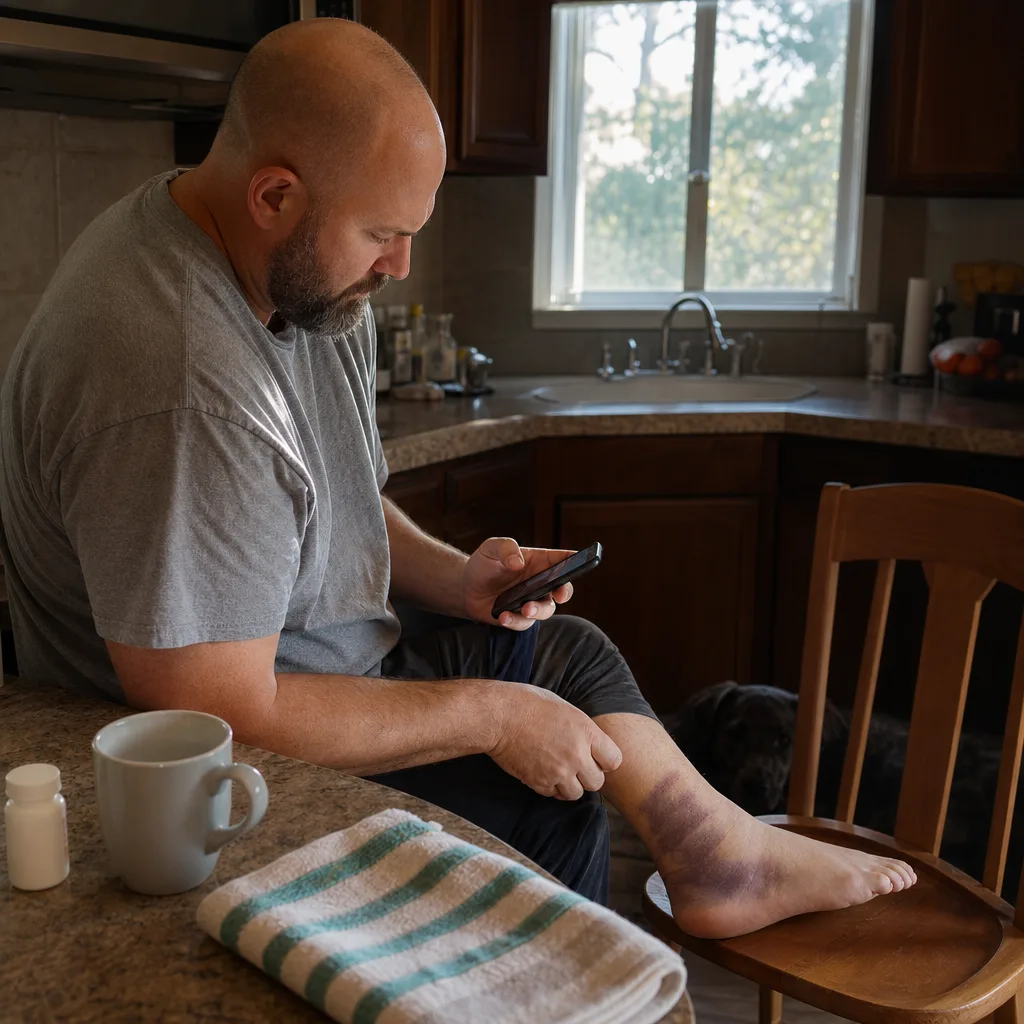
If it could be life-threatening, call 911 or go to the ER. Don't wait to reach anyone first. For everything else, your own doctor already knows your history and can help you decide, so that's often the smartest first call.
When you get hurt, the question isn't only "how bad is this?" It's also "who's the right person to look at it?" Each option does a different job, and knowing those jobs makes the choice a lot less stressful.
The ER is built for emergencies. It has the staff, imaging, and equipment for injuries that could threaten your life, a limb, or your sight. If your gut says this is serious, trust it. Call 911 or head to the nearest emergency room. That's never the wrong move when you're truly worried.
Urgent care fills the gap when your regular office is closed and you can't reach anyone. It can handle a lot of minor injuries. The trade-off is that you'll usually see someone who's never met you. They don't know your medications, your past injuries, or that you're managing diabetes or high blood pressure. Those details can change how a cut heals or which pain reliever is safe for you.
Your own doctor is the one person who already has the full picture. That's the heart of this page. A minor injury doesn't happen to a blank chart. It happens to you, with your history, your meds, and your health goals. A physician who knows all that can often tell you faster whether you need to be seen, what to watch for at home, and whether an X-ray or a specialist makes sense.
Here's a common moment. Your teenager rolls an ankle at practice. It's swollen but they can put some weight on it. You're not sure if it needs a visit tonight, a visit tomorrow, or just ice and rest. That's exactly the kind of call your own doctor can help you sort out, because they already know your child's health history.
At OG Health, our members can reach Dr. Grenardo directly by phone, text, and secure communication. Because the practice keeps its panel to 200 members, he isn't a stranger reading your chart for the first time. He's your family physician, a Fellow of the American Academy of Family Physicians with more than 30 years of clinical experience:
- Go to the ER or call 911 if you think the injury could be an emergency.
- Call your own doctor first when you're unsure, when the injury seems minor, or when you have health conditions or medications that could affect care.
- Use urgent care when you can't reach your doctor and the injury can't wait.
Our practice offers Same-Day Appointments, After-Hours Physician Access, and House Call Visits. If you need stitches-level wound attention or a bone that needs a closer look, we also provide Wound Care and Specialist Referrals, so you're not left figuring out the next step on your own.
What Minor Injury Care Covers at OG Health
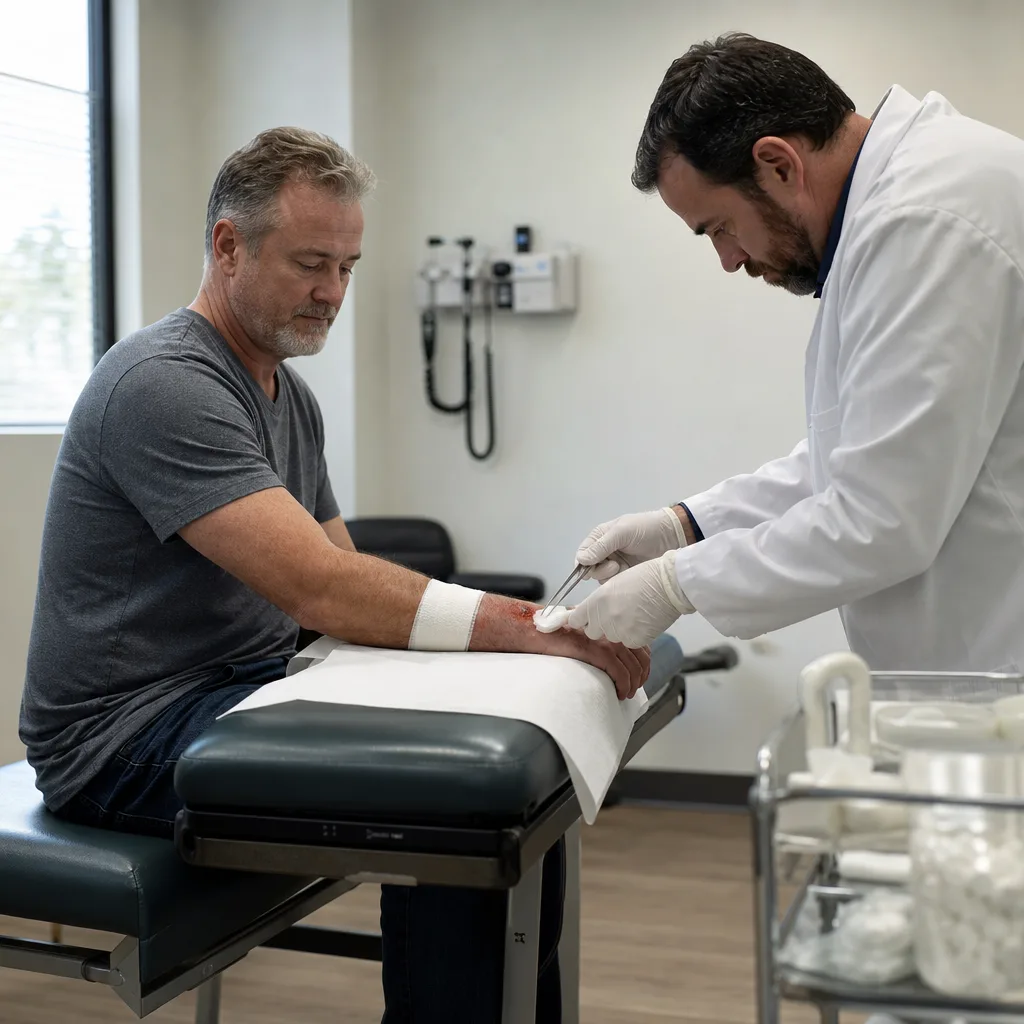
Minor injury care is for the bumps, cuts, and twists of everyday life that hurt and worry you but aren't emergencies. If you're in danger, go straight to the ER, as covered above. Everything else is a good reason to reach out to your own doctor first.
Here are the kinds of injuries people usually mean when they talk about minor injury care in family medicine:
- Sprained ankles, wrists, and knees from sports, hiking, or a slip on the stairs
- Pulled muscles and strains from yard work, lifting, or a new workout
- Small cuts and scrapes that need to be cleaned up and checked
- Minor burns from the stove, the grill, or a curling iron
- Bruises, bumps, and jammed fingers
- Sore spots after a fall that you're not sure about
The injury itself is only half the story. The other half is you. Two people can roll the same ankle and need very different advice, because of what's already going on in their health.
Say you take a blood thinner. A bruise that looks normal on someone else might need a closer look on you. If you have diabetes, even a small cut on your foot deserves more attention, because healing can be slower. If you're not sure when you had your last tetanus shot, a cut from a rusty tool raises a question your doctor can answer right away. A physician who already knows your chart doesn't have to start from zero. That's what makes your own doctor the smartest first call for a minor injury.
OG Health offers Minor Injury Care alongside Wound Care, so cuts and scrapes that need follow-up stay with the same physician. Because Dr. Grenardo also handles Medication Management and Chronic Disease Management for members, including blood pressure, diabetes, and asthma, advice about your injury can fit with the rest of your care instead of working against it. If an injury raises a question about your vaccines, Immunizations are part of the practice too.
Some injuries need more than a primary care visit. A bone might need imaging, or a joint might need an orthopedic specialist. That doesn't mean you're on your own. OG Health provides Specialist Referrals and Care Coordination, and Dr. Grenardo's approach includes medical advocacy and thoughtful referrals. You get help finding the right next step, and your doctor stays in the loop after you're seen.
Kids and teens get hurt too, often at practice or on the playground. Pediatric Care and Adolescent Health Services are both part of the practice, so the whole family can go to the same doctor who knows each of them. If your child plays sports, a Sports Physical before the season is a good time to talk about old injuries and how to avoid new ones.
If getting out the door is the hard part, OG Health also offers House Call Visits and Telehealth Visits. A quick video call can help you decide if that swollen wrist needs to be seen in person or can be watched at home for now.
When a Minor Injury Needs Urgent or Emergency Care Instead
Some injuries look small at first and turn out not to be. Others are clearly serious from the first second. In those cases, don't call us first. Don't text, and don't wait for a callback. Get emergency help, and let your doctor catch up later.
Call 911 or go to the nearest emergency room if you notice any of these:
- Bleeding that won't stop, even when you press on it
- A bone poking through the skin, or an arm, leg, or finger that's bent the wrong way
- A hit to the head followed by passing out, confusion, repeated throwing up, or a headache that keeps getting worse
- Numbness, tingling, or weakness in an arm or leg, or a hand or foot that turns pale, blue, or cold
- Trouble breathing, chest pain, or pain in the belly after a fall or crash
- A burn that's large, deep, or on the face, hands, feet, or private areas
- Any injury to the eye that affects your vision
- A neck or back injury, especially with numbness or trouble moving. Try not to move the person, and call 911
Head injuries deserve extra care because they can fool you. A child who bonks their head on the playground may seem fine for a while and then act sleepy, cranky, or confused later. If someone's behavior changes after a head bump, treat it as an emergency, even if the bump itself looks small.
Some injuries don't need the ER but still can't wait. A cut that gapes open, won't stay closed, or came from something dirty may need to be closed or cleaned soon. A joint that swells fast and can't hold any weight may need an X-ray. If you can't reach your doctor and it can't wait until morning, urgent care is a sensible choice, as we covered earlier.
Watch for a minor injury that turns into something else a few days later. According to the Mayo Clinic, signs of infection include redness that spreads out from a cut, warmth, pus, red streaks, fever, or pain that gets worse instead of better.[1] Those are reasons to get checked the same day. If you also feel very sick, have a high fever, or the redness is spreading quickly, go in right away.
Here's the honest part. If you're torn between "this is probably fine" and "this could be bad," go get seen. Nobody at an emergency room will be upset that you came in for something that turned out to be small. Guessing wrong in the careful direction costs you some time. Guessing wrong the other way can cost a lot more, especially after a head injury or with an injury near the spine.
Once you're safe, keep any discharge papers, test results, and new prescriptions. Share them with your own doctor so your follow-up care, medications, and any health conditions all stay on the same page.
Why Seeing a Physician Who Knows Your History Matters for Injury Care
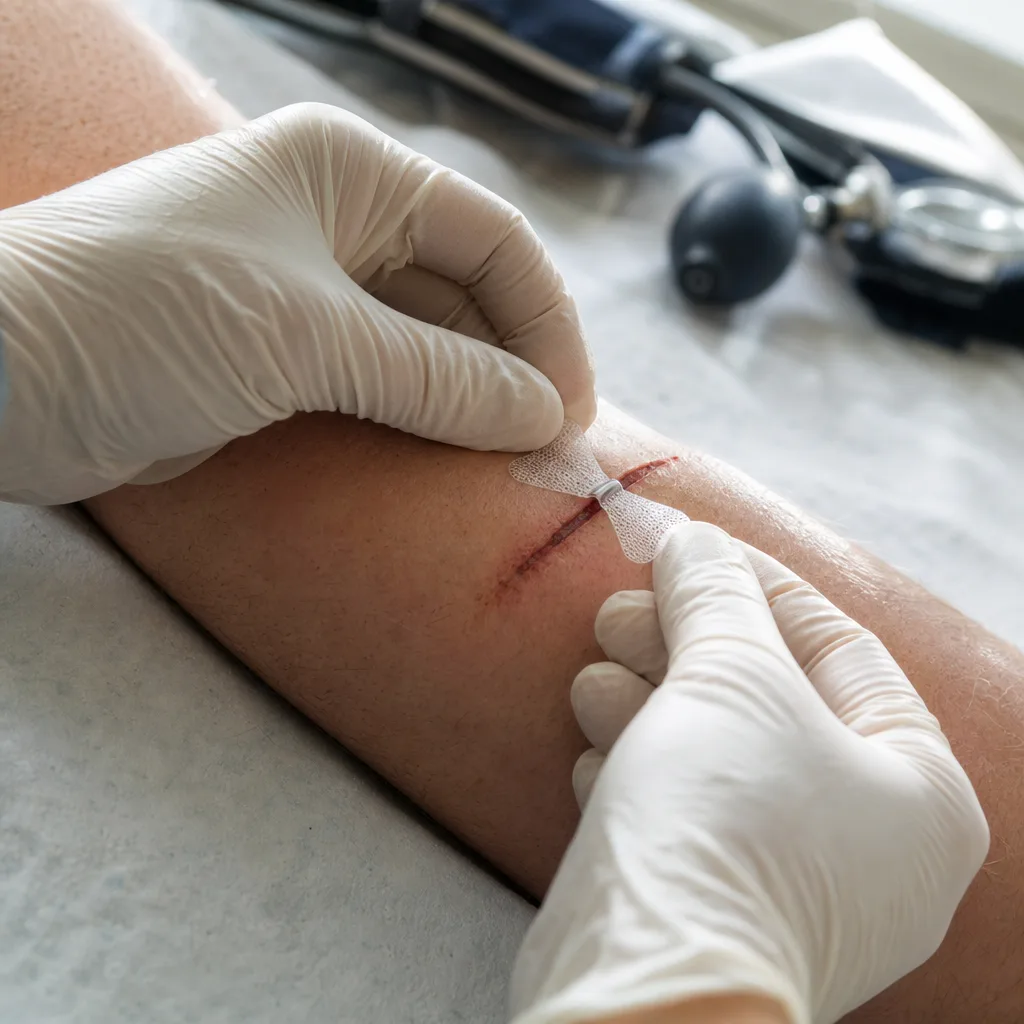
A stranger can look at a sprained wrist and see a sprained wrist. A doctor who's known you for years sees the wrist, plus everything around it. That wider view is the real reason minor injury care goes better with your own physician. It isn't about the bandage. It's about the story the injury is part of.
Take patterns. One rolled ankle is bad luck. The third rolled ankle on the same side in two years is a clue. Maybe the joint never fully healed, or maybe there's a weakness worth working on. A walk-in clinic only sees today's visit. Your own doctor can connect today to last spring and ask the question nobody else would think to ask.
Falls work the same way, especially for older adults. When a parent trips in the kitchen and bruises a hip, the bruise is the easy part. The harder question is why they fell. A new medication can cause dizziness. So can a blood pressure change, poor sleep, or weaker balance. Bone health can also turn a small fall into a bigger injury. A physician who manages that person's medications and conditions is in the best spot to spot the cause and help prevent the next fall. OG Health offers Senior Care and Arthritis Management, so those threads can be pulled together in one place.
Then there's your normal. Maybe your knee has clicked since college and never bothered you. Maybe your blood pressure always runs a little high at the doctor's office. Maybe you're someone who plays down pain, or someone who notices every twinge. A doctor who knows you can tell what's new and what's just you. That can mean fewer tests you don't need, and faster action on the ones you do.
Some details matter a lot in the moment and are easy to forget when you're hurting:
- An allergy to a certain antibiotic or a skin reaction to adhesive tape
- A recent surgery, or an old injury in the same spot
- A condition like asthma or high blood pressure that affects which medicines fit you
- Supplements or prescriptions you started recently
When you're in pain, rattling off that list to someone new is stressful, and things get missed. When your doctor already has it, you don't have to remember everything at your worst moment.
Finally, healing takes time, and it doesn't always go in a straight line. A strain that should feel better in a week might linger. A scrape might look fine and then get angry a few days later. When the same doctor who saw the injury is the one you check in with, they can tell whether things are on track because they saw where you started. You're not explaining it all over again to someone new, and small changes are less likely to slip through the cracks.
That's what continuity really buys you. It's not just convenient. It's a doctor who can put today's injury in the context of your whole health, and that often leads to better, safer choices about what comes next.
How to Reach OG Health for a Same-Day Injury Visit
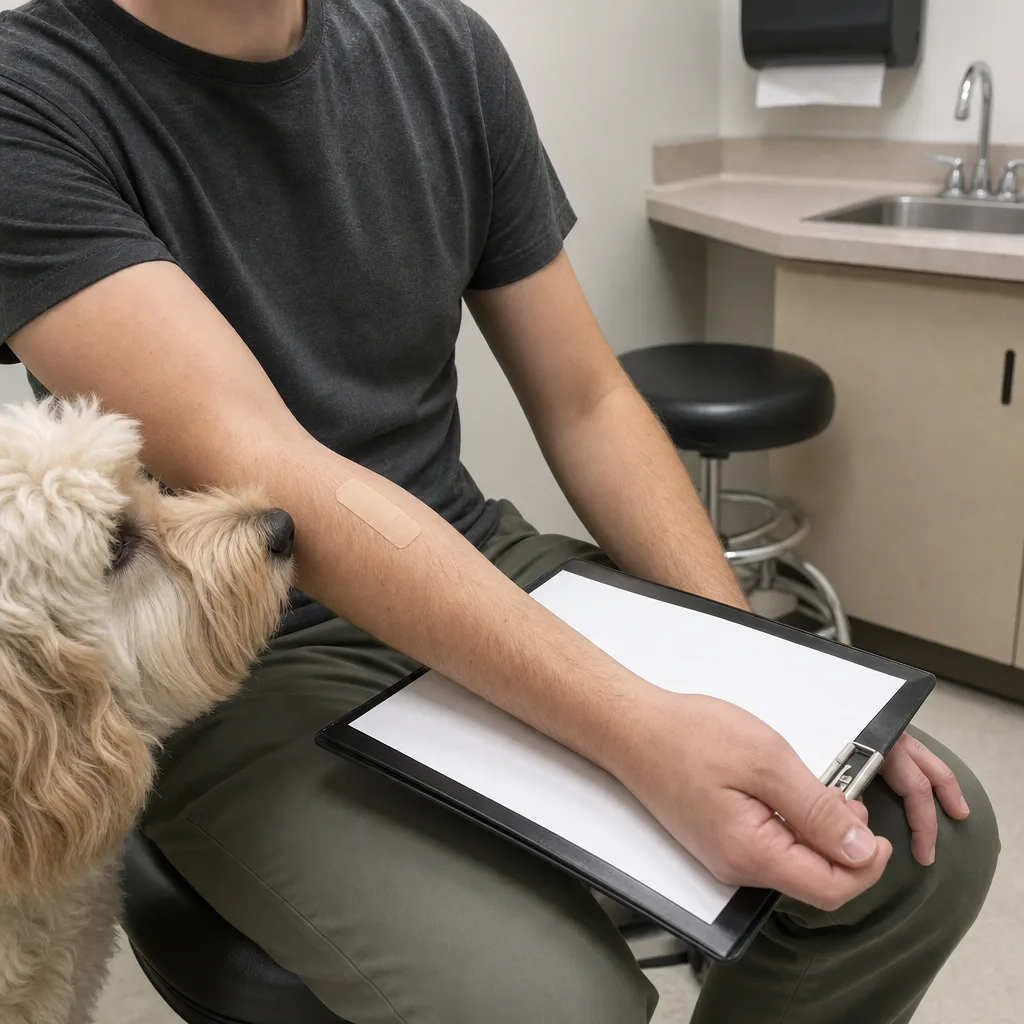
When you're hurt, you don't want to dig through a phone tree or wait for someone to call you back. At OG Health, members can reach Dr. Grenardo directly by phone, text, and secure communication. That means your first conversation about an injury is with your own physician, not a call center or a doctor you've never met.
If the injury matches any of the emergency signs we covered earlier, skip this step and call 911. For everything else, reaching out to your doctor first is the fastest way to find out what you need.
You don't need to have it all figured out before you call. Having a few details ready helps the conversation go faster, especially when you're rattled or trying to calm down a crying kid. Try to be ready to share:
- What happened and when. For example, "I slipped on the back steps about an hour ago."
- Where it hurts and whether the pain is getting better, staying the same, or getting worse
- What you can and can't do right now, like putting weight on a foot, bending a finger, or turning your head
- Any swelling, bruising, or bleeding you can see, and how it's changed since the injury
- Anything you've already taken for pain and any new medications or supplements since your last visit
- For a cut or scrape, what caused it and whether it was dirty or rusty
From there, you and Dr. Grenardo can decide together what makes sense. OG Health offers Same-Day Appointments when an injury should be looked at today. Telehealth Visits can help when you want a doctor to see a swollen wrist or an angry-looking scrape before you decide whether to come in. House Call Visits are also part of the practice, which can matter a lot for an older parent who took a fall and can't easily get into the car.
Injuries don't keep office hours. A kid gets hurt at an evening game, or you twist a knee on a weekend hike. OG Health offers After-Hours Physician Access, so a sprain at 8 p.m. doesn't automatically mean a night in a waiting room with strangers. Your doctor can help you sort out whether it can wait until morning, needs a visit, or needs urgent care right now.
If the injury needs more than a primary care visit, like imaging or an orthopedic specialist, Specialist Referrals and Wound Care keep the next step connected to the doctor who already knows you. You won't be left holding a sticky note with a phone number and no plan.
OG Health is in Greenwood Village, Colorado. The practice keeps its panel to 200 members on purpose. That's what makes direct access to your physician possible. If you're not a member yet and you want this kind of relationship before the next rolled ankle or kitchen burn, reach out and ask whether there's room on the panel. It's much easier to set that up on a calm day than in the middle of an injury.